Category: Gear Reviews

  • Best GPS Watches for Triathlon — Why I Switched From Apple Watch to Garmin (And What I Would Buy Next)

    Disclosure: This post contains affiliate links. If you click and buy, I earn a small commission at no extra cost to you. I only recommend products I personally use or have researched thoroughly.

    Best GPS Watches for Triathlon — Why I Switched From Apple Watch to Garmin (And What I Would Buy Next)

    I learned the hard way that not every GPS watch is built for endurance sports. My first multisport watch was an Apple Watch Series 1. It tracked my runs, looked great, and did everything a smartwatch should do — right up until it died halfway through a half marathon. Dead battery, no data, no finish line split. That was the last time I relied on an Apple Watch for a race.

    I switched to the Garmin Fenix 5 and have been wearing it for over five years. It has been on my wrist through sprint triathlons, half iron distance races including Ironman 70.3 Dallas, open water swims, and thousands of miles of training. It is the piece of gear I trust more than almost anything else in my kit.

    In this post I am going to walk you through what I have used, what I would recommend at different price points, and what I am personally planning to buy next — the Garmin Fenix 7 Solar — as soon as my bonus hits.

    Quick Picks at a Glance

    Best overall for triathletes: Garmin Fenix 7 Solar

    Best mid-range: Garmin Forerunner 965

    Best budget entry: Garmin Forerunner 255

    Best Apple ecosystem option: Apple Watch Ultra 2

    What I have worn for 5+ years: Garmin Fenix 5

    Why Apple Watch Does Not Work for Triathlon

    The Apple Watch Series 1 died on me at mile 7 of a half marathon. That was enough for me.

    Battery life is the dealbreaker. The original Apple Watch was rated for about 18 hours of general use — which sounds fine until you realize that GPS tracking in workout mode drains it dramatically faster. I did not make it through a half marathon. For a triathlon where you might be racing for 5-17 hours depending on distance, that is simply not workable.

    Apple has improved significantly with the Apple Watch Ultra 2, which now offers legitimate multi-sport tracking and much better battery life. If you are deeply embedded in the Apple ecosystem and want to stay there, the Ultra 2 is the first Apple Watch I would actually consider for triathlon. But it comes at a premium price and still does not match Garmin for triathlon-specific features.

    For most triathletes, Garmin is the answer. Here is why.

    What I Have Worn for close to 10 Years — Garmin Fenix 5

    I have been racing and training with the Garmin Fenix 5 for close to ten years. Here is my honest take.

    The Fenix 5 was built for endurance athletes and it shows. Battery life in GPS mode runs 24 hours — enough for a full Ironman with room to spare. The multisport mode lets you move seamlessly between swim, bike, and run with a single button press, which is exactly what you need in a triathlon transition.

    After ten years of daily wear, pool swims, open water swims, long rides, and races, it still works perfectly. The screen has scratches. The band has been replaced once. The watch itself is bulletproof.

    What it lacks compared to newer models: No solar charging, older maps, no multiband GPS. It is a 2017 watch and it shows in a few areas. But for a triathlete who just needs reliable multisport tracking and battery life that lasts through any race, it still does the job.

    The Fenix 5 is discontinued but you can still find it used or refurbished. If budget is a concern it is worth considering — just know you are buying older technology. Facebook marketplace is a great place to look for these.

    What I Am Buying Next — Garmin Fenix 7 Solar

    Price range: $599-$899 depending on size and edition

    I am saving for the Fenix 7 Solar. This is the watch I would buy today if I were starting fresh.

    The solar charging is the headline feature and it is genuinely meaningful for endurance athletes. In training mode with solar assist, battery life extends significantly beyond the standard GPS mode rating — on a sunny Texas ride you are adding meaningful charge just by being outside. For Ironman-distance racing and big training weeks, that matters.

    The Fenix 7 also adds multiband GPS for significantly improved accuracy, a touchscreen alongside the traditional buttons, and Garmin’s latest health monitoring features including HRV status and improved sleep tracking. It is a meaningful upgrade from the Fenix 5 in almost every area.

    Who it is best for: Serious triathletes who want the best multisport watch on the market and are willing to pay for it. If you are training for a half or full Ironman, this is the one to get.

    Search “Garmin Fenix 7 Solar” on Amazon for current pricing — prices vary by size (47mm vs 51mm) and edition.

    Best Mid-Range Option — Garmin Forerunner 965

    Price range: $499-$599

    If the Fenix 7 price is hard to swallow, the Forerunner 965 gives you most of the same triathlon functionality at a lower price point. It has full multisport mode, AMOLED display, multiband GPS, and excellent battery life. The main difference from the Fenix line is the build — the Forerunner is lighter and less rugged, which some athletes prefer for racing.

    Who it is best for: Triathletes who want premium GPS features without the Fenix price tag. Excellent choice for sprint through half iron distance racing.

    Search “Garmin Forerunner 965” on Amazon for current pricing.

    Best Budget Entry — Garmin Forerunner 255

    Price range: $249-$349

    For athletes just getting into triathlon who do not want to spend $600 on a watch, the Forerunner 255 is a legitimate starting point. It has multisport mode, solid GPS accuracy, and battery life that will handle any sprint or Olympic distance race comfortably. It lacks some of the advanced training metrics of the higher-end models but gives you everything you need to race and train effectively.

    Who it is best for: First-time triathletes or athletes on a budget who still want a reliable Garmin multisport watch.

    Search “Garmin Forerunner 255” on Amazon for current pricing.

    What to Look For in a Triathlon GPS Watch

    Multisport mode is non-negotiable. You need a watch that can track swim, bike, and run as separate activities and transition between them quickly. Not all GPS watches have this.

    Battery life matters more than you think. For sprint distance you need 2-3 hours. For half iron you need 5-8 hours. For full Ironman you need 12-17 hours. Check the GPS mode battery rating before you buy.

    Open water swim tracking. Make sure your watch supports open water swimming, not just pool swimming. Most Garmin multisport watches do but always verify.

    Bike computer compatibility. If you use a separate bike computer like I do, make sure your watch can connect to your power meter and heart rate monitor simultaneously.

    Bottom Line

    If you are serious about triathlon, get a Garmin. The Apple Watch taught me that lesson at mile 7 of a half marathon and I have not looked back in five years. My Fenix 5 has been one of the best gear investments I have made and the Fenix 7 Solar is next on my list.

    Budget pick: Forerunner 255. Mid-range: Forerunner 965. Best in class: Fenix 7 Solar. Any of the three will serve you well on race day.

    Questions about which watch is right for your distance or budget? Drop a comment below.

    — Andrew | My Life With AE | Competitive triathlete, 10+ years racing, Ironman Jacksonville 2027
  • 7 Best Triathlon Wetsuits for Beginners (From Someone Who’s Actually Raced in Them)

    Disclosure: This post contains affiliate links. If you click and buy, I earn a small commission at no extra cost to you. I only recommend gear I believe in.

    Screenshot

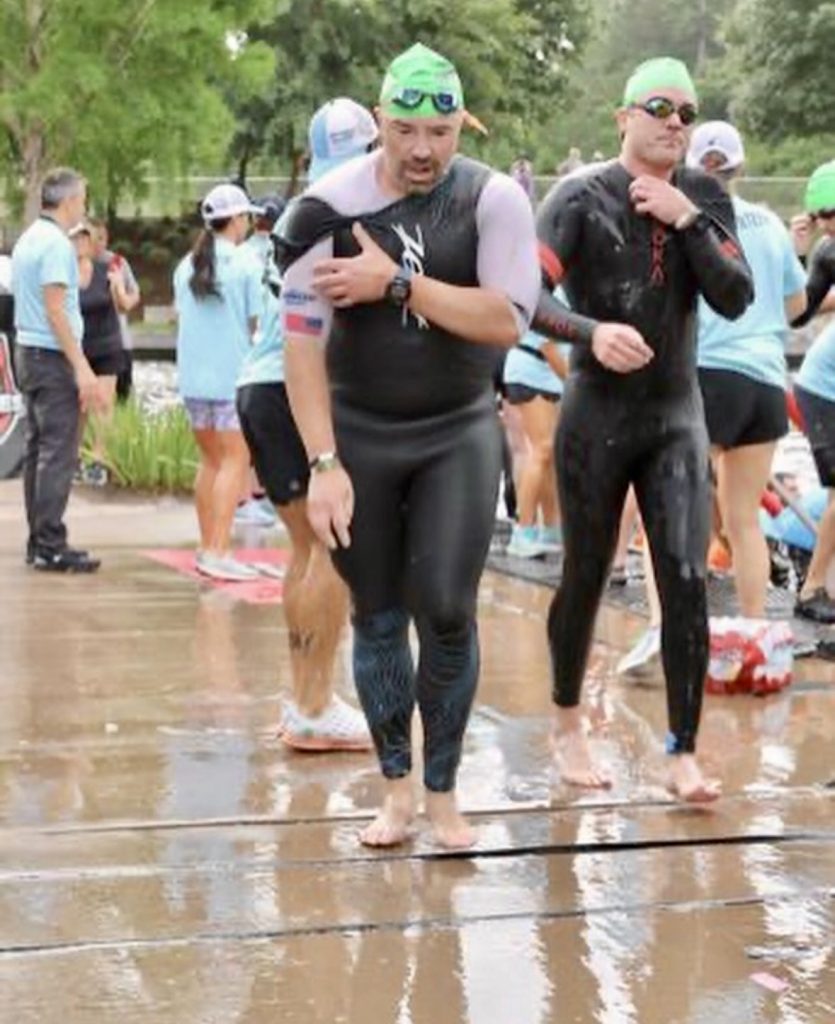
    If you’re new to triathlon and staring at a wall of wetsuits wondering what on earth you actually need, I’ve been there. I’ve raced in multiple wetsuits over the years — including the Roka Maverick, my current Zoot Maui sleeveless, and a Sailfish full suit I bought in a panic the morning of a race when I forgot my tri bag in Austin. All three taught me something different about what actually matters in a wetsuit.

    The short version: you need something that keeps you buoyant, doesn’t restrict your shoulder stroke, and doesn’t take 20 minutes to wrestle off in T1. Here are seven wetsuits I’d recommend to any beginner triathlete, based on real race experience and honest research.

    Quick Picks at a Glance

    Best overall: Roka Maverick Comp II (direct from Roka)

    Best budget: TYR Hurricane Cat 1 → Check price on Amazon

    Best for serious beginners: Orca Athlex Flex → Check price on Amazon

    Best for open water: BlueSeventy Reaction → Check price on Amazon

    Most comfortable: Speedo Fastskin LZR Openwater

    Best for arm mobility: Zoot Maui Sleeveless → Check price on Amazon

    The emergency purchase that surprised me: Sailfish (check your local tri shop)

    1. Roka Maverick Comp II — Best Overall

    Price range: $350–$450 | Best for: Sprint through Half-Iron distance

    I raced in the original Roka Maverick Comp for years: this wetsuit is fast. Roka builds with competitive swimmers in mind, meaning the shoulder panels allow a full freestyle stroke without the rubber-band feeling you get in cheaper suits. Buoyancy is strong at the hips and legs, and stripping it in T1 takes under 30 seconds once you get the hang of it.

    Who it’s best for: Any beginner who wants to buy once and not regret it. Note: Roka sells direct at roka.com — not available on Amazon.

    2. TYR Hurricane Cat 1 — Best Budget Pick

    Price range: $175–$200 | Best for: First-timers who want a quality suit without breaking the bank

    If you’re racing in Texas or Florida where water temps push the upper limits of wetsuit-legal, the TYR Hurricane Cat 1 is worth considering. Thinner than most suits so you won’t overheat, but still gives meaningful buoyancy assistance. At under $200 it’s one of the best value suits on the market.

    Who it’s best for: Athletes doing their first sprint or Olympic distance in warmer climates who want a solid suit at a great price.

    → Check the TYR Hurricane Cat 1 price on Amazon

    3. BlueSeventy Reaction — Best for Open Water

    Price range: $250–$300 | Best for: Swimmers who want more speed in open water

    The buoyancy panel placement is excellent — specifically tuned to help swimmers who tend to have sinking legs, which is common in runners-turned-triathletes. The outer surface also reduces drag in choppy open water.

    Who it’s best for: Runners or cyclists who came to triathlon without a strong swim background.

    → Check the BlueSeventy Reaction price on Amazon

    4. Orca Athlex Flex — Best for Serious Beginners

    Price range: $280–$320 | Best for: Athletes ready to invest in a suit they’ll race for multiple seasons

    Orca has been making triathlon wetsuits for decades and the Athlex Flex is their sweet spot for athletes who want premium performance without the top-tier price tag. It lifts your legs, doesn’t strangle your shoulders, and is built to last multiple seasons.

    Who it’s best for: Athletes who’ve done one or two races and are ready to upgrade to a suit they’ll grow into.

    → Check the Orca Athlex Flex price on Amazon

    5. Speedo Fastskin LZR Openwater — Most Comfortable

    Price range: $300–$380 | Best for: Athletes who find wetsuits claustrophobic

    Speedo brings their pool expertise to open water and the result feels less like a rubber band and more like a second skin. If you have wetsuit anxiety, this is the one to try.

    Who it’s best for: Athletes newer to open water who want a suit comfortable enough to actually enjoy the swim. Check your local tri shop or speedo.com for availability.

    6. Zoot Maui Sleeveless — Best for Arm Mobility ★ I Own This One

    Price range: $150–$200 | Best for: Swimmers who want zero shoulder restriction

    Full disclosure: this is the wetsuit I am currently racing in, so I can speak to it from direct experience.

    Going sleeveless means you give up a small amount of upper body buoyancy, but what you gain is a completely unrestricted freestyle pull. Zoot’s Neoskin neoprene is noticeably softer than standard neoprene, which matters for longer swims where chafing becomes a real issue. T1 transitions are also noticeably faster with less neoprene to strip.

    Who it’s best for: Strong swimmers who prioritize stroke efficiency, or anyone who has ever felt restricted by a full wetsuit.

    → Check the Zoot Maui Sleeveless price on Amazon

    7. Sailfish — The Emergency Purchase That Surprised Me

    Price range: $200–$350 | Best for: Athletes who want warmth without sacrificing mobility

    Here’s the story: I showed up to race in Dallas and realized I’d left my entire tri bag back in Austin. Race morning, no wetsuit. I walked into a local tri shop and grabbed the Sailfish full suit off the rack. It turned out to be a genuinely nice wetsuit.

    What impressed me most was the combination of warmth and mobility. Full sleeve wetsuits can feel restrictive across the shoulders, but the Sailfish panels are cut generously enough that I did not feel restricted in my stroke. The neoprene quality is noticeably above what you get at this price point.

    Who it’s best for: Athletes who race in cooler conditions and want full-sleeve warmth without the shoulder restriction. Check your local tri shop for Sailfish availability.

    What to Look For When Buying Your First Triathlon Wetsuit

    Fit comes first. Always use the brand size chart. Wetsuits should feel snug but not painful, with no air pockets in the torso.

    Full vs. sleeveless: know the trade-off. Full suits give more buoyancy and warmth. Sleeveless gives more arm freedom and faster transitions.

    Check the shoulder panels. Put the suit on and do a full freestyle arm rotation. If you feel significant resistance, the suit is too restrictive.

    Know the wetsuit rules for your race. In USAT-sanctioned races, wetsuits are legal at 78°F or below. Check your specific race rules before you buy.

    Practice in it before race day. At least 2–3 times. T1 in a wetsuit is a skill — practice it in training, not in front of 500 athletes.

    Bottom Line

    My personal rotation: Zoot Maui sleeveless for warm races where arm mobility is priority, Sailfish full suit when the water is cold. If I were buying a first wetsuit today I’d go Orca Athlex Flex to keep costs down, or Zoot Maui if shoulder mobility is your priority.

    Questions about fit, sizing, or which suit is right for your specific race? Drop a comment below.