Blog

  • My 2026 Race Schedule — Building Toward Ironman Jacksonville

    My 2026 Race Schedule — Building Toward Ironman Jacksonville

    My 2026 Race Schedule — Building Toward Ironman Jacksonville

    Every year I sit down and map out my race calendar before I do anything else. 2026 is a building year for me

    Here is my full 2026 race schedule, what I am targeting at each event, and how each one fits into the bigger picture.

    Race 1 — Ironman 70.3 Dallas/Little Elm | March 15, 2026 ✓ COMPLETED

    Distance: 1.2 mile swim / 56 mile bike / 13.1 mile run

    Dallas was personal before it even started. At Ironman 70.3 Galveston I made the decision not to race when the swim was cancelled and the weather turned ugly. I questioned that decision for a long time afterward. Could I handle hard conditions? Would I fold when things got difficult?

    Dallas answered that question.

    The swim was cancelled again — dangerous winds on race morning. Headwinds hammered the bike course. Everything that could make a race harder, did. And I finished. Not perfectly — I underfueled on the bike and my run split showed it — but I crossed that finish line and proved something to myself that no good-weather race ever could have.

    What I learned: Finishing Dallas in those conditions mattered more than the time on the clock. I also learned that bike nutrition is non-negotiable — I had two bottles planned and only got through one. I rebuilt my entire fueling protocol after this race. Every event after Dallas is a chance to execute that plan the right way

    Dallas was tough but reminded me to never quit. One rotation of the pedals at a time, and one foot in front of the other.

    Race 2 — Super Sprint Triathlon | May 25, 2026 (Memorial Day)

    Distance: ~400m swim / ~10km bike / ~2.5km run

    This one is special for two reasons. First, I will be racing for the first time with my new team, Team Varlo. There is something different about racing with a team behind you — a kit that means something, people cheering your name, the sense that you are part of something bigger than your own finish time. I am looking forward to representing the team well on Memorial Day.

    Second — and this is the part I am most excited about — I am pacing a friend from work who is doing his first triathlon. I remember exactly what that felt like. The nerves, the uncertainty, wondering if you have what it takes to get through all three disciplines. Being the person who helps someone else cross their first triathlon finish line is a privilege I do not take lightly.

    My goal: Get my friend to that finish line with a smile on his face. Everything else is secondary.

    Training approach: I am in a cut phase through early June focused on leaning out while maintaining performance. The super sprint falls at the end of that block so I will arrive lighter and sharp. No taper needed at this distance — I will race off normal training and save my legs for the job of pacing

    Race 3 — Kerrville Triathlon | September 27, 2026

    Distance: TBD — checking the race details

    Kerrville is a well-known Texas triathlon set in the beautiful Hill Country. But this year it means more than just a race on my calendar. The Kerrville area was devastated by catastrophic flooding in 2025 — the race was cancelled and the community suffered enormously. I am racing this year specifically to show up for that community, support local businesses, and be part of the recovery. If you are a Texas triathlete looking for a reason to choose a race this fall, this is it.

    The bike course is known for its rolling Hill Country terrain which will be excellent training for Jacksonville. Heat will be a factor in late September but my hydration and sodium protocol will be fully dialed in by then.

    My goal: Execute my nutrition plan perfectly. Dallas showed me what happens when I do not. Kerrville is my chance to race a clean, well-fueled event and build confidence heading into the Ironman build — and to be part of something bigger than just a finish time.

    Training approach: The BPN Hybrid strength and triathlon program runs through early August, followed by a sprint-focused block through September. I will arrive at Kerrville with strong bike legs and a dialed nutrition protocol.

    Race 4 — Georgetown Half Marathon | December 2026

    Distance: 13.1 miles

    Before triathlon there was running. The half marathon is where I started and finishing the season with one every year is something I have held onto even as triathlon took over my race calendar. It is my way of staying connected to where this all began.

    In 2025 I ran Dallas and set a personal best. That race reminded me that triathlon training makes you a better runner — the cross training, the bike fitness, the strength work all show up when you toe the line of a standalone run. I want to see what 2026’s training block does for that number.

    Georgetown in December is about as good as Central Texas running weather gets. After months of summer heat training it genuinely feels like a reward — cool temps, flat course, fresh legs. The perfect way to close out the year.

    My goal: Run a smart, controlled race and ideally push that personal best even further. I want to arrive at my Ironman build in January 2027 knowing my run is in the best shape of my life.

    Training approach: October and November serve as a pre-Ironman block focused on run volume and strength maintenance. Georgetown is the capstone before the full 18-week Jacksonville plan kicks off January 11, 2027.

    The Bigger Picture — Ironman Jacksonville 2027

    Every race on this list is preparation for one thing: Ironman Jacksonville on May 16, 2027.

    Dallas taught me about nutrition execution. The super sprint will sharpen my transitions and race fitness. Kerrville will test my ability to race a complete, well-executed event in Texas heat. Georgetown will give me a running benchmark. Each race is a building block.

    My Ironman build starts January 11, 2027 — 18 weeks out from Jacksonville. By then I need an FTP of 200w on the bike, a dialed nutrition protocol, and the mental confidence that comes from executing races well. That is what 2026 is for.

    I have a prior Ironman DNF at IM Texas due to extreme wind conditions. Jacksonville is where I finish what I started. Everything between now and May 16, 2027 is in service of that goal.

    Follow Along

    I will be posting recaps after each race this year — what went well, what did not, what I would do differently. If you are training for your first triathlon or working toward your own Ironman, follow along. The journey is more honest than most race reports you will read.

    Questions about any of these races or how I am preparing? Drop a comment below.

    — Andrew | My Life With AE | Competitive triathlete, 10+ years racing, Ironman Jacksonville May 2027

  • The Strength Training Plan That Actually Works for Triathletes (3 Days, No Fluff)

    Disclosure: This post contains affiliate links. If you click and buy, I earn a small commission at no extra cost to you.

    When I started training for half iron distance triathlon I wanted to keep strength training in the mix. The problem is that most triathlon training plans either ignore the gym entirely or bolt on a generic full body routine that leaves you too wrecked to swim, bike, or run the next day.

    After experimenting with different approaches I landed on a three day structure that has worked consistently: one heavy compound day, one supporting accessory day, and one plyometrics day. Each session happens before my swim workout since I am already at the gym — that logistics decision alone made it sustainable week after week.

    This is not a bodybuilding program. It is not powerlifting. It is a strength plan built specifically around the demands of half iron distance triathlon — building force production and durability without accumulating so much fatigue that your swim, bike, and run training suffers.

    Why Triathletes Need Strength Training

    Triathlon is an endurance sport but endurance alone does not make you fast or resilient. Strength training fills three specific gaps that swim, bike, and run training cannot.

    Injury prevention. The repetitive nature of triathlon training — thousands of pedal strokes, thousands of running steps — creates muscular imbalances over time. Strength work corrects those imbalances before they become injuries.

    Force production. A stronger athlete applies more force per pedal stroke and per running stride. That means more speed for the same effort — exactly what you want late in a race when your form starts to break down.

    Late race durability. The run at the end of a triathlon is not just about aerobic fitness. It is about whether your legs can still produce power after hours of swimming and cycling. Strength training builds the muscular endurance to hold form when everything else is telling you to fall apart.

    The Logistics — Why Before Your Swim

    I do all three strength sessions before my swim workout. This sounds counterintuitive but it works for a simple reason: I am already at the gym.

    The biggest enemy of consistent strength training is friction. If your gym session requires a separate trip, a separate time slot, and a separate mental commitment on top of already training twice a day, it will be the first thing that gets dropped when life gets busy.

    Pairing strength with your swim session eliminates that friction. You are already there, already in training mode, already dressed. Lift first, swim after. The swim actually serves as an active recovery flush for the muscles you just worked — the water loosens everything up.

    One important note: keep your strength sessions to 45-60 minutes maximum before a swim. You are not trying to destroy yourself in the gym — you are trying to build durable strength that supports your triathlon performance.

    Day 1 — Heavy Compound Day

    Purpose: Build raw strength and force production across the entire body.

    This is your heaviest day. Compound movements that recruit the most muscle mass, performed at challenging weights with full recovery between sets. The goal is strength — not pump, not cardio, not fatigue. You should leave this session feeling worked but not wrecked.

    Key exercises:

    Squat (back or front) — 4 sets x 4-6 reps

    Deadlift or Romanian deadlift — 3 sets x 5 reps

    Bench press — 4 sets x 4-6 reps

    Barbell or dumbbell row — 4 sets x 6 reps

    Overhead press — 3 sets x 6 reps

    Rest 2-3 minutes between sets. This is not a circuit. Full recovery between heavy sets is what drives strength adaptation.

    Day 2 — Supporting / Accessory Day

    Purpose: Address the specific muscular imbalances and weak points that triathlon creates.

    This is the session most triathletes skip and the one that matters most for injury prevention. Single leg work, hip stability, shoulder health, and posterior chain strength. The muscles that keep you running well at mile 10 of a half iron run are built here.

    Key exercises:

    Single leg Romanian deadlift — 3 sets x 8 each leg

    Hip thrust or glute bridge — 4 sets x 10-12 reps

    Bulgarian split squat — 3 sets x 8 each leg

    Lateral band walks — 3 sets x 15 each direction

    Shoulder external rotation / face pulls — 3 sets x 15

    Calf raises — 3 sets x 15-20 (single leg if possible)

    The hip thrust and single leg work are non-negotiable. Weak glutes are behind most of the running injuries I see in triathletes — hip thrust fixes that.

    Day 3 — Plyometrics Day

    Purpose: Build explosive power and running economy — the ability to produce force quickly.

    This is the session that transfers most directly to race day performance. Plyometric training teaches your muscles to produce force rapidly — which improves running economy, reduces ground contact time, and helps you maintain form when fatigued.

    Key exercises:

    Box jumps — 4 sets x 5 reps (full reset between each rep)

    Broad jumps — 3 sets x 5 reps

    Single leg hops — 3 sets x 8 each leg

    Lateral bounds — 3 sets x 8 each direction

    Depth drops — 3 sets x 5 (step off box, land softly, no jump)

    Jump rope — 3 x 60 seconds

    Plyometrics require full recovery between sets — these are power exercises, not cardio. If you are breathing hard between sets you are going too fast. Rest 60-90 seconds minimum.

    How to Fit This Into Your Triathlon Training Week

    I run each strength session directly before a swim workout on three different days of the week. A sample week might look like:

    Monday: Mobility/Heavy compound + swim

    Wednesday: Supporting / accessory + swim

    Friday: Plyometrics + swim

    Tuesday, Thursday, Saturday: Bike and run sessions

    Sunday: Long run or rest

    The key is that your hardest bike and run days do not follow your heaviest strength days. Give your legs at least one night of recovery between a heavy squat session and a hard interval run.

    What to Reduce as Your Race Gets Closer

    Six to eight weeks out from your A race, start reducing strength volume. Drop sets and reps, keep the intensity. Four weeks out, cut plyometrics entirely. Two weeks out, move to maintenance only — one light full body session per week just to stay sharp.

    The strength you built over months does not disappear in two weeks. Trust the work you did and let your body arrive at race day fresh.

    Bottom Line

    Three days, paired with your swim sessions, focused on compound strength, single leg stability, and explosive power. That is the entire plan. It is not complicated but it is consistent, and consistency is what builds the durable athlete that holds form at mile 10 of a half iron run.

    Questions about how to adapt this for your specific training schedule or race distance? Drop a comment below.

    — Andrew | My Life With AE | Competitive triathlete, 10+ years racing, Ironman Jacksonville 2027

  • What I Actually Listen To During Triathlon Training (And Why Most Races I Listen to Nothing)

    Disclosure: This post contains affiliate links. If you click and buy or sign up, I earn a small commission at no extra cost to you. I only recommend things I personally use.

    Most triathlons do not allow headphones. Depending on race distance you are looking at anywhere from 90 minutes to 17 hours alone with your own thoughts, no music, no podcasts, no audiobooks. Just you, the course, and whatever is going on in your head.

    Because of that rule I do most of my training without headphones too — it is the only way to genuinely prepare for what race day feels like. Long rides, track workouts, open water swims. All silent.

    But on easy recovery rides, long drives to races, and the occasional relaxed training day, I listen to audiobooks. And my taste is all over the place — fantasy series, business books, astrophysics, motivational reads. If it keeps my brain engaged for a two hour easy ride, it makes the list.

    Here is what I have actually been listening to, and why I think audiobooks are one of the most underrated tools in a triathlete’s training toolkit.

    Why Audiobooks Work for Endurance Training

    Easy aerobic rides are supposed to be easy. Zone 2, conversational pace, low heart rate. The problem is that easy is boring, and boring leads to going too hard just to feel like you are doing something.

    An audiobook solves that problem. When you are genuinely engaged in a story or an idea, you stop thinking about your power output and just ride. Hours pass. Easy stays easy. Your aerobic base gets built without you fighting against the boredom of it.

    I have ridden easy for three hours on a book I could not put down. Without something to listen to that same ride would have taken everything I had mentally to stay in zone 2.

    What I Am Currently Listening To — Dungeon Crawler Carl

    I did not expect to get hooked on a fantasy series about a man and his cat navigating a post-apocalyptic dungeon. And yet here we are.

    Dungeon Crawler Carl by Matt Dinniman is the series I have been working through on easy rides. It is funny, fast-paced, and completely ridiculous in the best possible way. The narrator is excellent and the books are long enough that a two hour ride barely makes a dent in a single one. There are currently 8 books in the series with 10 planned total — that is a massive amount of listening content, more than enough to carry you through an entire Ironman training block

    If you are looking for something that makes easy training genuinely fun rather than something to endure, this series is it. It has nothing to do with triathlon and everything to do with making the miles go by.

    Search “Dungeon Crawler Carl” on Audible to find the full series.

    Best Motivational Listen — Can’t Hurt Me by David Goggins

    If you want to feel like your training is not hard enough, listen to David Goggins.

    Can’t Hurt Me is not a comfortable listen. Goggins is brutally honest about his past, his training, and what he believes most people are capable of if they stop making excuses. I do not agree with everything he says but I have never finished a session after listening to this book without feeling like I could have pushed harder.

    The audiobook version is particularly good because Goggins himself participates in extended conversations with the author between chapters — it feels less like a book and more like a podcast with someone who has genuinely done things most people only talk about.

    Best for: Pre-race week listening. Long training days when your motivation is low. Any day you are thinking about skipping a workout.

    Search “Can’t Hurt Me David Goggins” on Audible.

    Best Mindset Shift — The Subtle Art of Not Giving a F*ck by Mark Manson

    The title is provocative but the actual content is surprisingly practical. Manson’s core argument — that choosing what to care about is more important than trying to be positive about everything — resonates deeply with endurance sports.

    Triathlon involves a lot of suffering. Bad races, missed training blocks, injuries, days where everything falls apart. The athletes who last are not the ones who pretend it is all fine — they are the ones who have figured out what actually matters and let the rest go.

    This book helped me reframe some of my thinking around my AE diagnosis and what I can and cannot control. Worth a listen regardless of whether you are an athlete.

    Search “The Subtle Art of Not Giving a F*ck” on Audible.

    Best Business Listen — The 4-Hour Workweek by Tim Ferriss

    I rotate business books into my training listening because endurance sports and entrepreneurship share more DNA than people realize. Both require systems thinking, long-term planning, and the ability to do uncomfortable things consistently.

    The 4-Hour Workweek is the book that got a lot of people thinking differently about how they spend their time and what passive income actually looks like in practice. Some of it is dated but the core ideas around automation and building systems that work without you are as relevant now as when it was written.

    Best for: Long easy rides where you want your brain working on something while your legs turn over.

    Search “4 Hour Workweek Tim Ferriss” on Audible.

    Best Science Listen — Astrophysics for People in a Hurry by Neil deGrasse Tyson

    Short, dense, and genuinely fascinating. Neil deGrasse Tyson has a gift for making complex ideas feel accessible without dumbing them down, and this book is short enough that you can finish it across a few easy rides.

    There is something about thinking about the scale of the universe while grinding out a long ride that puts the suffering in perspective. Highly recommended for the triathlete who wants their easy days to feel less like wasted time and more like an opportunity to learn something.

    Search “Astrophysics for People in a Hurry” on Audible.

    How to Get All of These for Almost Nothing — Audible Free Trial

    If you are not already on Audible, the free trial is the best deal in endurance sports entertainment.

    Audible’s free trial gives you access to their full library and includes free credits to keep books even if you cancel. For a triathlete with hundreds of hours of training ahead, that is an easy decision. I use Audible for almost all of my audiobook listening and have for years.

    Every book on this list is available on Audible. Start with whichever one matches where you are right now — grinding through a hard training block (Goggins), looking for something fun on easy days (Dungeon Crawler Carl), or wanting a mindset reset (Manson).

    Start your free audible trial here!

    Bottom Line

    Train without headphones when you can — it prepares you for race day and builds mental toughness. But on easy days, use the time to feed your brain. The miles go faster, the easy stays easy, and you finish your ride having actually learned or experienced something.

    What are you currently listening to? Drop it in the comments — I am always looking for the next great listen.

    — Andrew | My Life With AE | Competitive triathlete, 10+ years racing, Ironman Jacksonville 2027
  • Best GPS Watches for Triathlon — Why I Switched From Apple Watch to Garmin (And What I Would Buy Next)

    Disclosure: This post contains affiliate links. If you click and buy, I earn a small commission at no extra cost to you. I only recommend products I personally use or have researched thoroughly.

    Best GPS Watches for Triathlon — Why I Switched From Apple Watch to Garmin (And What I Would Buy Next)

    I learned the hard way that not every GPS watch is built for endurance sports. My first multisport watch was an Apple Watch Series 1. It tracked my runs, looked great, and did everything a smartwatch should do — right up until it died halfway through a half marathon. Dead battery, no data, no finish line split. That was the last time I relied on an Apple Watch for a race.

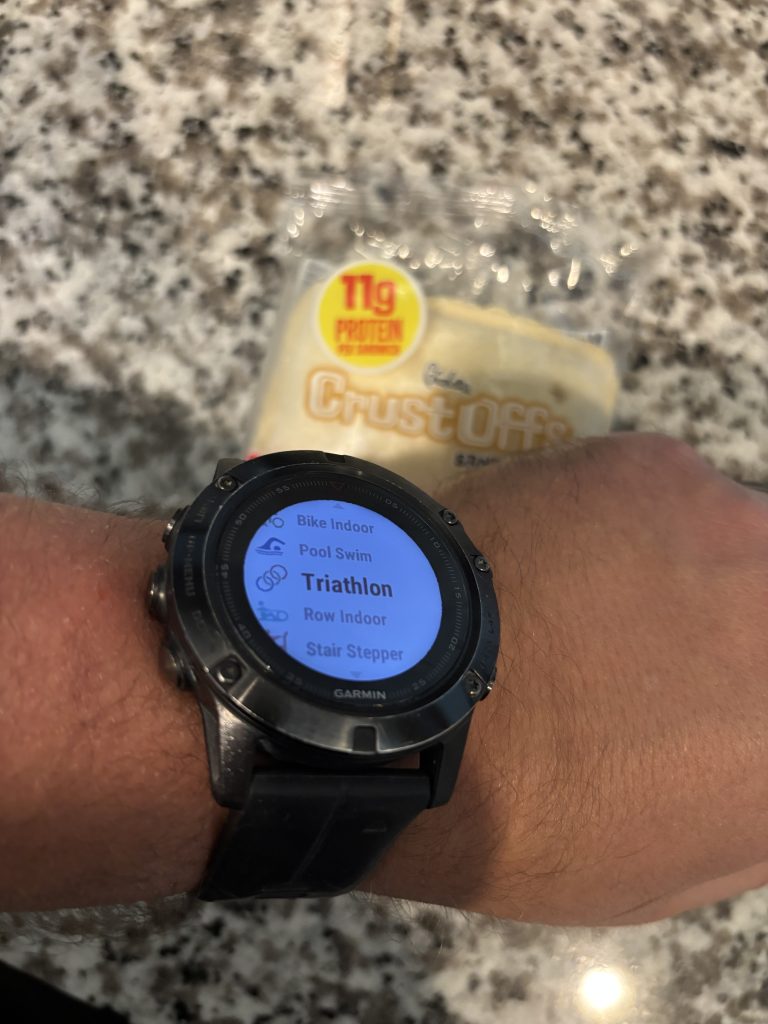
    I switched to the Garmin Fenix 5 and have been wearing it for over five years. It has been on my wrist through sprint triathlons, half iron distance races including Ironman 70.3 Dallas, open water swims, and thousands of miles of training. It is the piece of gear I trust more than almost anything else in my kit.

    In this post I am going to walk you through what I have used, what I would recommend at different price points, and what I am personally planning to buy next — the Garmin Fenix 7 Solar — as soon as my bonus hits.

    Quick Picks at a Glance

    Best overall for triathletes: Garmin Fenix 7 Solar

    Best mid-range: Garmin Forerunner 965

    Best budget entry: Garmin Forerunner 255

    Best Apple ecosystem option: Apple Watch Ultra 2

    What I have worn for 5+ years: Garmin Fenix 5

    Why Apple Watch Does Not Work for Triathlon

    The Apple Watch Series 1 died on me at mile 7 of a half marathon. That was enough for me.

    Battery life is the dealbreaker. The original Apple Watch was rated for about 18 hours of general use — which sounds fine until you realize that GPS tracking in workout mode drains it dramatically faster. I did not make it through a half marathon. For a triathlon where you might be racing for 5-17 hours depending on distance, that is simply not workable.

    Apple has improved significantly with the Apple Watch Ultra 2, which now offers legitimate multi-sport tracking and much better battery life. If you are deeply embedded in the Apple ecosystem and want to stay there, the Ultra 2 is the first Apple Watch I would actually consider for triathlon. But it comes at a premium price and still does not match Garmin for triathlon-specific features.

    For most triathletes, Garmin is the answer. Here is why.

    What I Have Worn for close to 10 Years — Garmin Fenix 5

    I have been racing and training with the Garmin Fenix 5 for close to ten years. Here is my honest take.

    The Fenix 5 was built for endurance athletes and it shows. Battery life in GPS mode runs 24 hours — enough for a full Ironman with room to spare. The multisport mode lets you move seamlessly between swim, bike, and run with a single button press, which is exactly what you need in a triathlon transition.

    After ten years of daily wear, pool swims, open water swims, long rides, and races, it still works perfectly. The screen has scratches. The band has been replaced once. The watch itself is bulletproof.

    What it lacks compared to newer models: No solar charging, older maps, no multiband GPS. It is a 2017 watch and it shows in a few areas. But for a triathlete who just needs reliable multisport tracking and battery life that lasts through any race, it still does the job.

    The Fenix 5 is discontinued but you can still find it used or refurbished. If budget is a concern it is worth considering — just know you are buying older technology. Facebook marketplace is a great place to look for these.

    What I Am Buying Next — Garmin Fenix 7 Solar

    Price range: $599-$899 depending on size and edition

    I am saving for the Fenix 7 Solar. This is the watch I would buy today if I were starting fresh.

    The solar charging is the headline feature and it is genuinely meaningful for endurance athletes. In training mode with solar assist, battery life extends significantly beyond the standard GPS mode rating — on a sunny Texas ride you are adding meaningful charge just by being outside. For Ironman-distance racing and big training weeks, that matters.

    The Fenix 7 also adds multiband GPS for significantly improved accuracy, a touchscreen alongside the traditional buttons, and Garmin’s latest health monitoring features including HRV status and improved sleep tracking. It is a meaningful upgrade from the Fenix 5 in almost every area.

    Who it is best for: Serious triathletes who want the best multisport watch on the market and are willing to pay for it. If you are training for a half or full Ironman, this is the one to get.

    Search “Garmin Fenix 7 Solar” on Amazon for current pricing — prices vary by size (47mm vs 51mm) and edition.

    Best Mid-Range Option — Garmin Forerunner 965

    Price range: $499-$599

    If the Fenix 7 price is hard to swallow, the Forerunner 965 gives you most of the same triathlon functionality at a lower price point. It has full multisport mode, AMOLED display, multiband GPS, and excellent battery life. The main difference from the Fenix line is the build — the Forerunner is lighter and less rugged, which some athletes prefer for racing.

    Who it is best for: Triathletes who want premium GPS features without the Fenix price tag. Excellent choice for sprint through half iron distance racing.

    Search “Garmin Forerunner 965” on Amazon for current pricing.

    Best Budget Entry — Garmin Forerunner 255

    Price range: $249-$349

    For athletes just getting into triathlon who do not want to spend $600 on a watch, the Forerunner 255 is a legitimate starting point. It has multisport mode, solid GPS accuracy, and battery life that will handle any sprint or Olympic distance race comfortably. It lacks some of the advanced training metrics of the higher-end models but gives you everything you need to race and train effectively.

    Who it is best for: First-time triathletes or athletes on a budget who still want a reliable Garmin multisport watch.

    Search “Garmin Forerunner 255” on Amazon for current pricing.

    What to Look For in a Triathlon GPS Watch

    Multisport mode is non-negotiable. You need a watch that can track swim, bike, and run as separate activities and transition between them quickly. Not all GPS watches have this.

    Battery life matters more than you think. For sprint distance you need 2-3 hours. For half iron you need 5-8 hours. For full Ironman you need 12-17 hours. Check the GPS mode battery rating before you buy.

    Open water swim tracking. Make sure your watch supports open water swimming, not just pool swimming. Most Garmin multisport watches do but always verify.

    Bike computer compatibility. If you use a separate bike computer like I do, make sure your watch can connect to your power meter and heart rate monitor simultaneously.

    Bottom Line

    If you are serious about triathlon, get a Garmin. The Apple Watch taught me that lesson at mile 7 of a half marathon and I have not looked back in five years. My Fenix 5 has been one of the best gear investments I have made and the Fenix 7 Solar is next on my list.

    Budget pick: Forerunner 255. Mid-range: Forerunner 965. Best in class: Fenix 7 Solar. Any of the three will serve you well on race day.

    Questions about which watch is right for your distance or budget? Drop a comment below.

    — Andrew | My Life With AE | Competitive triathlete, 10+ years racing, Ironman Jacksonville 2027

  • What I Actually Eat During a Triathlon (My Race Nutrition Stack)

    Disclosure: This post contains affiliate links. If you click and buy, I earn a small commission at no extra cost to you. I only recommend products I personally use.

    What I Actually Eat During a Triathlon (My Race Nutrition Stack)

    Triathlon nutrition is one of those topics that sounds simple until you bonk at mile 8 of a half-iron run and realize you have no idea what went wrong. I learned this the hard way at Ironman 70.3 Dallas — underfueling and underhydrating on the bike cost me significant time on the run. Since then I have dialed in a nutrition stack that actually works for me, and I want to walk you through exactly what I eat and drink from the morning of a race through the finish line.

    This is not a sponsored post. These are the products I genuinely use because they work for my body and my racing style. Your needs may vary — nutrition is personal — but if you are looking for a starting point, this is mine.

    My Full Race Nutrition Stack at a Glance

    Pre-ride/long training day: Uncrustables peanut butter sandwich or the Costco version Crust Off

    On the bike: Raw Fuel (100g carbs/hour) + Raw Replenish (sodium/electrolytes) + BPN Go Bars

    On the run: BPN Go Gels + Maurten gels + coke from aid stations (late race)

    Pre-Race and Long Ride Fuel — Uncrustables

    My go-to before every long ride and race morning: a Smucker’s Uncrustable.

    I know. It sounds absurd. But hear me out — the Uncrustable is easy on the stomach, hits the right carb-to-fat ratio for a pre-effort meal, requires zero preparation, and tastes good enough that you actually want to eat it when your race anxiety has killed your appetite. Elite cyclists have been eating these for years for exactly the same reasons.

    I eat one about 60-90 minutes before a long ride or on race morning. Simple, reliable, no GI issues. That is everything you want from a pre-race meal.

    Pro tip: Keep a box in your freezer and pull one out the night before a race. By morning it is thawed and ready. Find them at H-E-B or any grocery store — no need to buy online. If you enjoy them, Costco sells a huge box of their version for relatively cheap.

    On the Bike — Raw Fuel

    Price range: $40-55 per bag | Target: 100g carbohydrates per hour

    Raw Fuel is the centerpiece of my bike nutrition. I target 100g of carbohydrates per hour on the bike, and Raw Fuel makes hitting that number straightforward.

    100g per hour sounds like a lot — and it is. Most recreational athletes fuel at 30-60g per hour, which is why so many people fall apart on the run. Your body can absorb significantly more than that if you train your gut to handle it, which is exactly what long training rides are for. I practice my race nutrition in training so my body is used to processing that volume of carbohydrates under effort.

    Raw Fuel mixes clean, sits well in my stomach even at high effort, and does not cause the GI distress I have experienced with some other carb products. I mix it into my bottles before the race and sip consistently throughout the bike — every 15-20 minutes rather than waiting until I feel hungry.

    The lesson from Dallas: I underfueled on the bike and paid for it on the run. My run split suffered significantly because my legs ran out of glycogen. Now I treat bike nutrition as non-negotiable — if I am not hitting my carb targets I am borrowing from my run.

    Raw Fuel (100g carbs/hour); I like the Lemon Lime, but the orange flavor is just as good!

    On the Bike — Raw Replenish (Electrolytes and Sodium)

    Price range: $35-45 per bag | Purpose: Sodium replacement and hydration

    Carbohydrates get all the attention in triathlon nutrition but sodium is just as critical, especially racing in Texas heat. Raw Replenish is my electrolyte product of choice — I mix it alongside Raw Fuel in my bike bottles to replace the sodium I am sweating out.

    Sodium matters because it drives thirst, helps your body retain fluid, and prevents the dangerous condition of hyponatremia — drinking too much water without enough sodium to balance it. In a long race in hot conditions, low sodium can be just as dangerous as dehydration.

    I pair Raw Replenish with Raw Fuel in every bottle. They are designed to work together and I have not had a cramping or hydration issue since adding Replenish to my stack.

    Search ” Raw Replenish” on Amazon for current availability.

    On the Bike — BPN Go Bars

    Price range: $35-40 per box | Purpose: Solid food carbohydrates mid-bike

    Liquid carbohydrates alone can get mentally exhausting over a long bike. BPN Go Bars give me something to chew, which helps psychologically on longer efforts. I keep one or two in my jersey pocket and eat them in the first half of the bike when my stomach is still happy to handle solid food.

    BPN (Bare Performance Nutrition) makes clean products without the artificial ingredients and gut-wrecking sugar alcohols you find in a lot of sports nutrition bars. The Go Bar is easy to unwrap with one hand while riding, which matters more than you think when you are in aero position at 20mph.

    I switch away from solid food in the second half of the bike as my body redirects blood flow and digestion gets harder. That is when I lean fully on liquid carbohydrates through the finish of the ride.

    Search “BPN Go Bars” on Amazon for current flavors and pricing.

    On the Run — BPN Go Gels and Maurten

    Price range: BPN $30-35 per box | Maurten $45-55 per box

    By the time I hit the run my stomach has been processing fuel for hours. I switch to gels because they are fast, require no chewing, and are easy to take at aid stations without breaking stride.

    I alternate between BPN Go Gels and Maurten 100 gels depending on how my stomach is feeling. BPN is slightly thicker and more flavorful — good when I want something that feels substantial. Maurten is almost tasteless and extremely easy on the stomach — good late in a race when the thought of eating anything sweet makes you want to quit.

    Maurten gels are worth the price for long course racing. Their hydrogel technology genuinely reduces GI distress compared to traditional gels. If you have ever felt nauseous late in a race from too many sugary gels, Maurten is the answer. They are also the official nutrition sponsor of Ironman races starting in 2026, which means you will find them at aid stations on the course — one less thing to carry or worry about on race day.

    I take a gel every 20-25 minutes on the run, chased with water at the next aid station.

    The Secret Weapon — Coke at Mile 8+

    If you have never grabbed a cup of flat Coke at a late-race aid station, you are missing out on one of triathlon’s oldest tricks.

    Coca-Cola shows up at most half and full iron distance aid stations in the later miles. It delivers fast sugar, a small caffeine hit, and something that actually tastes good when you are deep in the pain cave. I start taking Coke when it is available in the last third of the run — it is not a scientific decision, it is a survival decision, and it works.

    What I Learned From Dallas — The Underfueling Tax

    At Ironman 70.3 Dallas I paid what I call the underfueling tax. I did not hit my carb targets on the bike, I did not drink enough with my sodium, and my run split reflected every mistake I made in those four hours on the bike. You cannot make up for poor bike nutrition on the run — by then the damage is done.

    The stack I have outlined above is what I built after that race. It is not complicated but it requires discipline — eating and drinking on a schedule even when you do not feel hungry, which is almost always.

    The golden rule: Eat before you are hungry. Drink before you are thirsty. By the time you feel either, you are already behind.

    Bottom Line

    My race nutrition stack in order of importance: Raw Fuel for carbohydrates, Raw Replenish for sodium, Uncrustables before long efforts, BPN Go Bars for solid food on the bike, BPN and Maurten gels on the run, and Coke when available late in the race.

    Start with the basics — nail your carb and sodium targets first. Everything else is refinement. Questions about nutrition or what has worked for you? Drop a comment below.

    — Andrew | My Life With AE | Competitive triathlete, 10+ years racing, Ironman Jacksonville 2027
  • 7 Best Triathlon Wetsuits for Beginners (From Someone Who’s Actually Raced in Them)

    Disclosure: This post contains affiliate links. If you click and buy, I earn a small commission at no extra cost to you. I only recommend gear I believe in.

    Screenshot

    If you’re new to triathlon and staring at a wall of wetsuits wondering what on earth you actually need, I’ve been there. I’ve raced in multiple wetsuits over the years — including the Roka Maverick, my current Zoot Maui sleeveless, and a Sailfish full suit I bought in a panic the morning of a race when I forgot my tri bag in Austin. All three taught me something different about what actually matters in a wetsuit.

    The short version: you need something that keeps you buoyant, doesn’t restrict your shoulder stroke, and doesn’t take 20 minutes to wrestle off in T1. Here are seven wetsuits I’d recommend to any beginner triathlete, based on real race experience and honest research.

    Quick Picks at a Glance

    Best overall: Roka Maverick Comp II (direct from Roka)

    Best budget: TYR Hurricane Cat 1 → Check price on Amazon

    Best for serious beginners: Orca Athlex Flex → Check price on Amazon

    Best for open water: BlueSeventy Reaction → Check price on Amazon

    Most comfortable: Speedo Fastskin LZR Openwater

    Best for arm mobility: Zoot Maui Sleeveless → Check price on Amazon

    The emergency purchase that surprised me: Sailfish (check your local tri shop)

    1. Roka Maverick Comp II — Best Overall

    Price range: $350–$450 | Best for: Sprint through Half-Iron distance

    I raced in the original Roka Maverick Comp for years: this wetsuit is fast. Roka builds with competitive swimmers in mind, meaning the shoulder panels allow a full freestyle stroke without the rubber-band feeling you get in cheaper suits. Buoyancy is strong at the hips and legs, and stripping it in T1 takes under 30 seconds once you get the hang of it.

    Who it’s best for: Any beginner who wants to buy once and not regret it. Note: Roka sells direct at roka.com — not available on Amazon.

    2. TYR Hurricane Cat 1 — Best Budget Pick

    Price range: $175–$200 | Best for: First-timers who want a quality suit without breaking the bank

    If you’re racing in Texas or Florida where water temps push the upper limits of wetsuit-legal, the TYR Hurricane Cat 1 is worth considering. Thinner than most suits so you won’t overheat, but still gives meaningful buoyancy assistance. At under $200 it’s one of the best value suits on the market.

    Who it’s best for: Athletes doing their first sprint or Olympic distance in warmer climates who want a solid suit at a great price.

    → Check the TYR Hurricane Cat 1 price on Amazon

    3. BlueSeventy Reaction — Best for Open Water

    Price range: $250–$300 | Best for: Swimmers who want more speed in open water

    The buoyancy panel placement is excellent — specifically tuned to help swimmers who tend to have sinking legs, which is common in runners-turned-triathletes. The outer surface also reduces drag in choppy open water.

    Who it’s best for: Runners or cyclists who came to triathlon without a strong swim background.

    → Check the BlueSeventy Reaction price on Amazon

    4. Orca Athlex Flex — Best for Serious Beginners

    Price range: $280–$320 | Best for: Athletes ready to invest in a suit they’ll race for multiple seasons

    Orca has been making triathlon wetsuits for decades and the Athlex Flex is their sweet spot for athletes who want premium performance without the top-tier price tag. It lifts your legs, doesn’t strangle your shoulders, and is built to last multiple seasons.

    Who it’s best for: Athletes who’ve done one or two races and are ready to upgrade to a suit they’ll grow into.

    → Check the Orca Athlex Flex price on Amazon

    5. Speedo Fastskin LZR Openwater — Most Comfortable

    Price range: $300–$380 | Best for: Athletes who find wetsuits claustrophobic

    Speedo brings their pool expertise to open water and the result feels less like a rubber band and more like a second skin. If you have wetsuit anxiety, this is the one to try.

    Who it’s best for: Athletes newer to open water who want a suit comfortable enough to actually enjoy the swim. Check your local tri shop or speedo.com for availability.

    6. Zoot Maui Sleeveless — Best for Arm Mobility ★ I Own This One

    Price range: $150–$200 | Best for: Swimmers who want zero shoulder restriction

    Full disclosure: this is the wetsuit I am currently racing in, so I can speak to it from direct experience.

    Going sleeveless means you give up a small amount of upper body buoyancy, but what you gain is a completely unrestricted freestyle pull. Zoot’s Neoskin neoprene is noticeably softer than standard neoprene, which matters for longer swims where chafing becomes a real issue. T1 transitions are also noticeably faster with less neoprene to strip.

    Who it’s best for: Strong swimmers who prioritize stroke efficiency, or anyone who has ever felt restricted by a full wetsuit.

    → Check the Zoot Maui Sleeveless price on Amazon

    7. Sailfish — The Emergency Purchase That Surprised Me

    Price range: $200–$350 | Best for: Athletes who want warmth without sacrificing mobility

    Here’s the story: I showed up to race in Dallas and realized I’d left my entire tri bag back in Austin. Race morning, no wetsuit. I walked into a local tri shop and grabbed the Sailfish full suit off the rack. It turned out to be a genuinely nice wetsuit.

    What impressed me most was the combination of warmth and mobility. Full sleeve wetsuits can feel restrictive across the shoulders, but the Sailfish panels are cut generously enough that I did not feel restricted in my stroke. The neoprene quality is noticeably above what you get at this price point.

    Who it’s best for: Athletes who race in cooler conditions and want full-sleeve warmth without the shoulder restriction. Check your local tri shop for Sailfish availability.

    What to Look For When Buying Your First Triathlon Wetsuit

    Fit comes first. Always use the brand size chart. Wetsuits should feel snug but not painful, with no air pockets in the torso.

    Full vs. sleeveless: know the trade-off. Full suits give more buoyancy and warmth. Sleeveless gives more arm freedom and faster transitions.

    Check the shoulder panels. Put the suit on and do a full freestyle arm rotation. If you feel significant resistance, the suit is too restrictive.

    Know the wetsuit rules for your race. In USAT-sanctioned races, wetsuits are legal at 78°F or below. Check your specific race rules before you buy.

    Practice in it before race day. At least 2–3 times. T1 in a wetsuit is a skill — practice it in training, not in front of 500 athletes.

    Bottom Line

    My personal rotation: Zoot Maui sleeveless for warm races where arm mobility is priority, Sailfish full suit when the water is cold. If I were buying a first wetsuit today I’d go Orca Athlex Flex to keep costs down, or Zoot Maui if shoulder mobility is your priority.

    Questions about fit, sizing, or which suit is right for your specific race? Drop a comment below.

  • From Diagnosis to Ironman — My Story

    My name is Andrew. In 2017, I was diagnosed with Autoimmune Encephalitis (AE), and more specific form called Central Nervous System Vasculitis (CNSV). This blog started as a way to document that journey. It became something more.


    In the winter of 2019, my neurologist told me my immunosuppressant wasn’t working the way it should. The decision was made to try a new treatment — one that would eliminate my B cells entirely. My doctor gave me a simple but serious instruction: work out 6 to 7 days a week and eat a healthy diet.


    As a previous marathon runner, I knew I didn’t want to run six days a week. Then one day, sitting at a stoplight, I saw a cyclist ride past with an Ironman logo on his jersey. I pulled out my phone and Googled ‘how long do you need to train for an easy triathlon.’ Twelve weeks was the most common answer. As luck would have it, there was a race twelve weeks out.

    That was the beginning. My first race was a Sprint — 400m swim, 10km bike, 2.5km run. I crossed the finish line and felt something I hadn’t expected: a deep sense of accomplishment. Not just from the race, but from everything that had gotten me there. I was hooked.
    “In the bad there is always something good. You just have to look for it.”

    Since that first race I’ve completed multiple Sprint distance events, a relay with my wife, and multiple half-iron distance races including Ironman 70.3 Memphis and most recently Dallas/Little Elm. I’m now building toward Ironman Jacksonville in May 2027.

    Triathlon training gave me something my diagnosis tried to take away: time to be alone with my thoughts, process what was happening, and build something healthy out of it.


    What This Site Is About


    My Life With AE started as a health blog. It’s evolved into something that reflects where I am now: a competitive age-group triathlete based in Austin, Texas, who happens to also be managing a serious autoimmune condition.

    I write about triathlon gear, race nutrition, training, and the products I actually use — because I’ve spent years figuring out what works and what doesn’t, and I’d rather you benefit from that than start from scratch. I have 10+ years of racing experience, I’ve competed in events from Super Sprint to Full distance, and I’m training to complete my first full Ironman.

    This site contains affiliate links, which means I may earn a small commission if you buy through them — at no extra cost to you. I only recommend gear I’ve personally used or researched thoroughly.

    Where to Start


    New here? Start with these:
    7 Best Triathlon Wetsuits for Beginners (From Someone Who’s Actually Raced in Them) – My Life With AE
    What I Actually Eat During a Triathlon (My Race Nutrition Stack)
    → Best GPS Watches for Triathlon (Tested Over 10+ Years of Racing)

    Disclaimer

    I’m not a doctor or medical professional. I’m just a guy who has been dealing with a difficult disease and wants to raise awareness the best way he knows how — by doing something, and bringing people along for the ride.