Disclosure: This post contains affiliate links. If you click and buy, I earn a small commission at no extra cost to you. I only recommend products I personally use.
What I Actually Eat During a Triathlon (My Race Nutrition Stack)
Triathlon nutrition is one of those topics that sounds simple until you bonk at mile 8 of a half-iron run and realize you have no idea what went wrong. I learned this the hard way at Ironman 70.3 Dallas — underfueling and underhydrating on the bike cost me significant time on the run. Since then I have dialed in a nutrition stack that actually works for me, and I want to walk you through exactly what I eat and drink from the morning of a race through the finish line.
This is not a sponsored post. These are the products I genuinely use because they work for my body and my racing style. Your needs may vary — nutrition is personal — but if you are looking for a starting point, this is mine.
My Full Race Nutrition Stack at a Glance (What to Buy First
If you just want the short version, this is the exact nutrition setup I use on race day and in long training sessions:
Pre‑ride / race morning
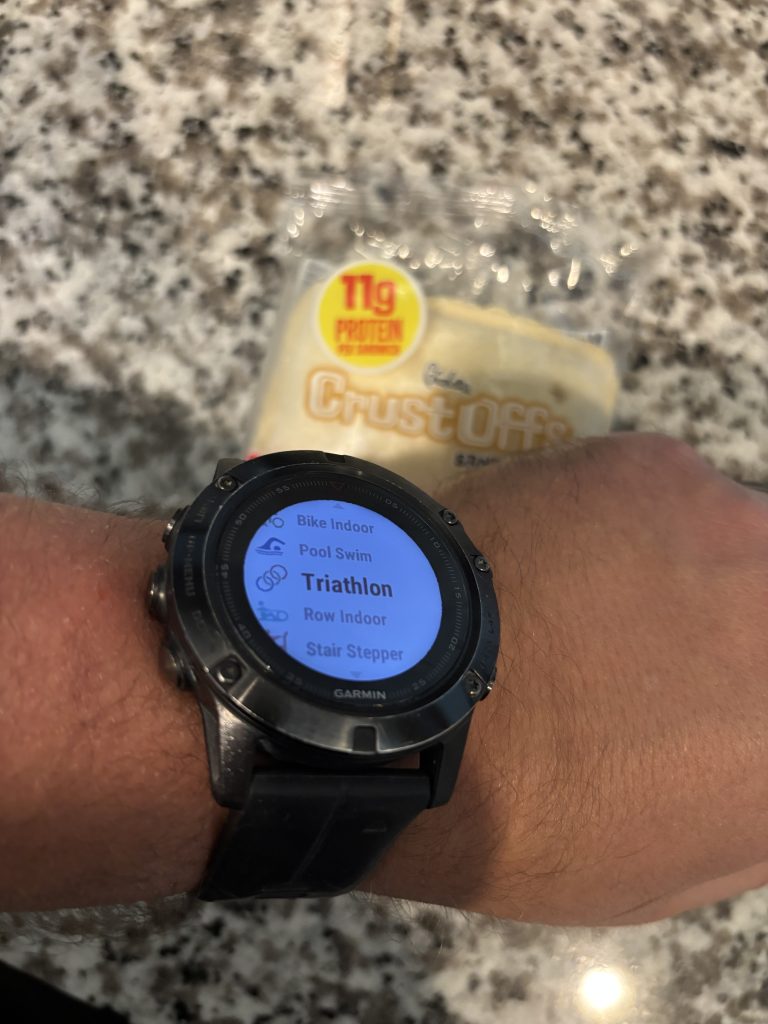
- Uncrustables peanut butter sandwich or the Costco version Crust Off
Simple carbs + fat, zero prep, and easy on the stomach.
On the bike (the most important part)
- Raw Fuel (100g carbs/hour) + Raw Replenish (sodium/electrolytes) + BPN Go Bars
On the run:
- BPN Go Gels early
- Maurten gels later when my stomach is more sensitive
- Coke from aid stations in the final miles for fast sugar and caffeine
If you’re overwhelmed, start with Raw Fuel (100g carbs/hour) + Raw Replenish (sodium/electrolytes) on the bike — that alone will solve most bonking and late‑race fade issues.
I break down each product below — including how much I use and why — so you can decide what works best for you
Pre-Race and Long Ride Fuel — Uncrustables
My go-to before every long ride and race morning: a Smucker’s Uncrustable.
I know. It sounds absurd. But hear me out — the Uncrustable is easy on the stomach, hits the right carb-to-fat ratio for a pre-effort meal, requires zero preparation, and tastes good enough that you actually want to eat it when your race anxiety has killed your appetite. Elite cyclists have been eating these for years for exactly the same reasons.
I eat one about 60-90 minutes before a long ride or on race morning. Simple, reliable, no GI issues. That is everything you want from a pre-race meal.
Pro tip: Keep a box in your freezer and pull one out the night before a race. By morning it is thawed and ready. Find them at H-E-B or any grocery store — no need to buy online. If you enjoy them, Costco sells a huge box of their version for relatively cheap.
On the Bike — Raw Fuel
Price range: $40-55 per bag | Target: 100g carbohydrates per hour
Raw Fuel is the centerpiece of my bike nutrition. I target 100g of carbohydrates per hour on the bike, and Raw Fuel makes hitting that number straightforward.
100g per hour sounds like a lot — and it is. Most recreational athletes fuel at 30-60g per hour, which is why so many people fall apart on the run. Your body can absorb significantly more than that if you train your gut to handle it, which is exactly what long training rides are for. I practice my race nutrition in training so my body is used to processing that volume of carbohydrates under effort.
Raw Fuel mixes clean, sits well in my stomach even at high effort, and does not cause the GI distress I have experienced with some other carb products. I mix it into my bottles before the race and sip consistently throughout the bike — every 15-20 minutes rather than waiting until I feel hungry.
The lesson from Dallas: I underfueled on the bike and paid for it on the run. My run split suffered significantly because my legs ran out of glycogen. Now I treat bike nutrition as non-negotiable — if I am not hitting my carb targets I am borrowing from my run.
Raw Fuel (100g carbs/hour); I like the Lemon Lime, but the orange flavor is just as good!
On the Bike — Raw Replenish (Electrolytes and Sodium)
Price range: $35-45 per tub | Purpose: Sodium replacement and hydration
Carbohydrates get all the attention in triathlon nutrition but sodium is just as critical, especially racing in Texas heat. Raw Replenish is my electrolyte product of choice — I mix it alongside Raw Fuel in my bike bottles to replace the sodium I am sweating out.
Sodium matters because it drives thirst, helps your body retain fluid, and prevents the dangerous condition of hyponatremia — drinking too much water without enough sodium to balance it. In a long race in hot conditions, low sodium can be just as dangerous as dehydration.
I pair Raw Replenish with Raw Fuel in every bottle. They are designed to work together and I have not had a cramping or hydration issue since adding Replenish to my stack.
Search ” Raw Replenish” on Amazon for current availability.
On the Bike — BPN Go Bars
Price range: $35-40 per box | Purpose: Solid food carbohydrates mid-bike
Liquid carbohydrates alone can get mentally exhausting over a long bike. BPN Go Bars give me something to chew, which helps psychologically on longer efforts. I keep one or two in my jersey pocket and eat them in the first half of the bike when my stomach is still happy to handle solid food.
BPN (Bare Performance Nutrition) makes clean products without the artificial ingredients and gut-wrecking sugar alcohols you find in a lot of sports nutrition bars. The Go Bar is easy to unwrap with one hand while riding, which matters more than you think when you are in aero position at 20mph.
I switch away from solid food in the second half of the bike as my body redirects blood flow and digestion gets harder. That is when I lean fully on liquid carbohydrates through the finish of the ride.
Search “BPN Go Bars” on Amazon for current flavors and pricing.
On the Run — BPN Go Gels and Maurten
Price range: BPN $30-35 per box | Maurten $45-55 per box
By the time I hit the run my stomach has been processing fuel for hours. I switch to gels because they are fast, require no chewing, and are easy to take at aid stations without breaking stride.
I alternate between BPN Go Gels and Maurten 100 gels depending on how my stomach is feeling. BPN is slightly thicker and more flavorful — good when I want something that feels substantial. Maurten is almost tasteless and extremely easy on the stomach — good late in a race when the thought of eating anything sweet makes you want to quit.
Maurten gels are worth the price for long course racing. Their hydrogel technology genuinely reduces GI distress compared to traditional gels. If you have ever felt nauseous late in a race from too many sugary gels, Maurten is the answer. They are also the official nutrition sponsor of Ironman races starting in 2026, which means you will find them at aid stations on the course — one less thing to carry or worry about on race day.
I take a gel every 20-25 minutes on the run, chased with water at the next aid station.
The Secret Weapon — Coke at Mile 8+
If you have never grabbed a cup of flat Coke at a late-race aid station, you are missing out on one of triathlon’s oldest tricks.
Coca-Cola shows up at most half and full iron distance aid stations in the later miles. It delivers fast sugar, a small caffeine hit, and something that actually tastes good when you are deep in the pain cave. I start taking Coke when it is available in the last third of the run — it is not a scientific decision, it is a survival decision, and it works.
What I Learned From Dallas — The Underfueling Tax
At Ironman 70.3 Dallas I paid what I call the underfueling tax. I did not hit my carb targets on the bike, I did not drink enough with my sodium, and my run split reflected every mistake I made in those four hours on the bike. You cannot make up for poor bike nutrition on the run — by then the damage is done.
The stack I have outlined above is what I built after that race. It is not complicated but it requires discipline — eating and drinking on a schedule even when you do not feel hungry, which is almost always.
The golden rule: Eat before you are hungry. Drink before you are thirsty. By the time you feel either, you are already behind.
Bottom Line
My race nutrition stack in order of importance: Raw Fuel for carbohydrates, Raw Replenish for sodium, Uncrustables before long efforts, BPN Go Bars for solid food on the bike, BPN and Maurten gels on the run, and Coke when available late in the race.
Start with the basics — nail your carb and sodium targets first. Everything else is refinement. Questions about nutrition or what has worked for you? Drop a comment below.
— Andrew | My Life With AE | Competitive triathlete, 10+ years racing, Ironman Jacksonville 2027
Leave a Reply