Author: Andrew

  • Why I Switched From a TT Helmet to an Aero Road Helmet (And What It Cost Me

    Why I Switched From a TT Helmet to an Aero Road Helmet (And What It Cost Me

    Disclosure: This post contains affiliate links. If you click and buy, I earn a small commission at no extra cost to you. I only recommend gear I believe in.

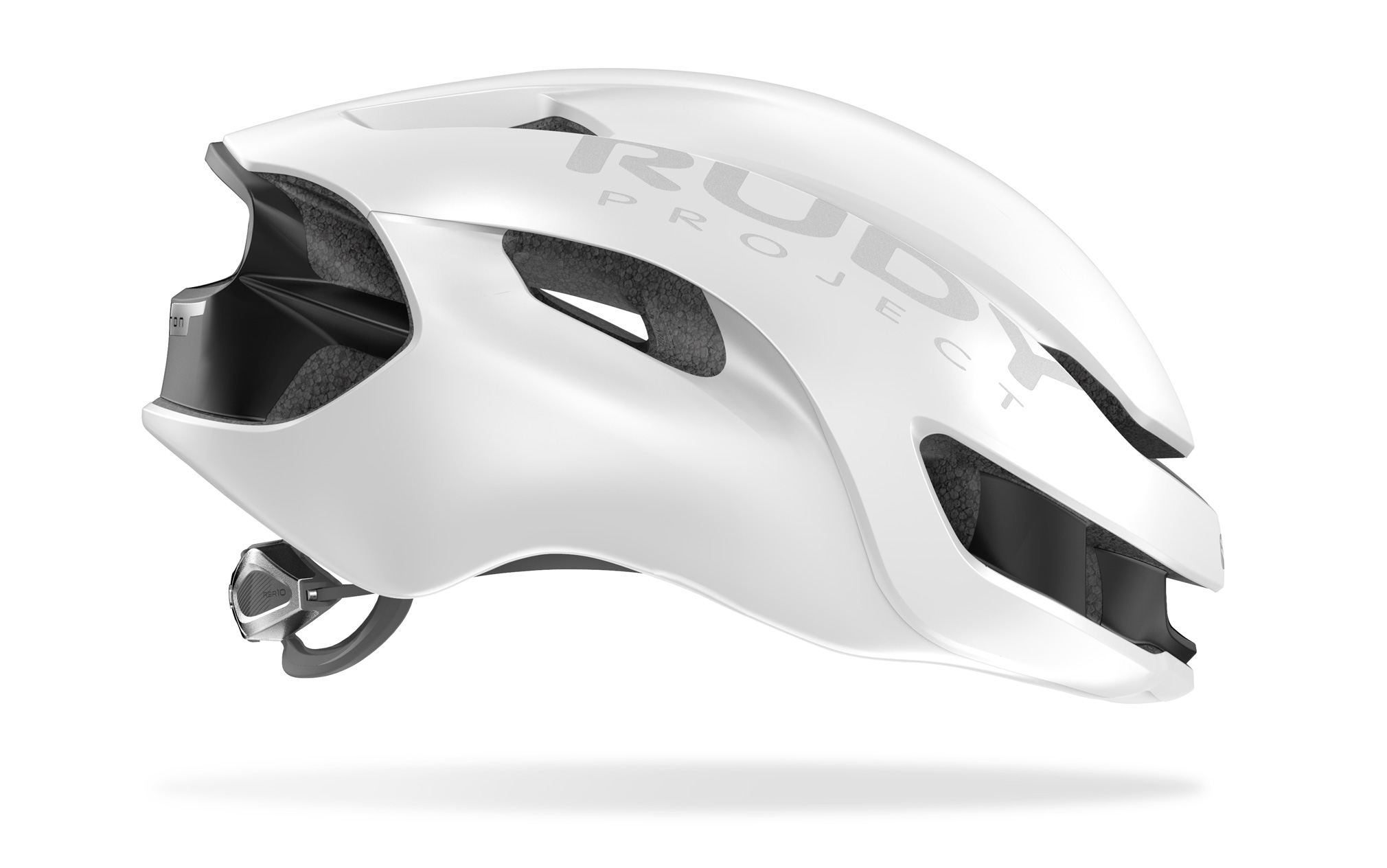
    I raced for years in the Rudy Project Wing — a proper aero TT helmet, the kind with a long tail and a magnetic visor. Then I switched to the Rudy Project Nytron, and I haven’t gone back.

    I’ll be honest about why, because it wasn’t a calculated decision. The Wing was too hot. I was racing and training in Texas, and by the end of the bike leg I was cooked in a way that had nothing to do with my fitness. So I tried something else, and I liked it better.

    That’s the whole story. What’s interesting is that the numbers back it up — the switch I made for comfort turned out to be the faster call for me.


    What a TT Helmet Is Actually For

    Let me not pretend the Wing wasn’t fast. Rudy Project claims closing the front vent saves 12.6 watts at 28mph, and there’s real wind tunnel and CFD work behind that number — this is a helmet with Swiss Side aero development, not marketing copy.

    If your race is short and your position is good, a TT helmet is the fastest thing you can put on your head. That’s just true.

    The catch: a TT helmet is designed for a time trial position — head down, back flat, holding the same shape for the whole ride. It’s not designed to keep you cool, and it’s not designed for the moments when you sit up.


    Why I Switched

    It was too hot. That’s the honest answer. Texas summers are brutal, and a closed-off TT helmet turns into a sauna on a long ride. I wasn’t comfortable, and comfort on a 56 or 112-mile bike leg isn’t a luxury — it’s the thing your whole race is built on.

    I’m not in a TT position most of the time. I’m an age-group triathlete, not a pro. I sit up for aid stations, for climbs, for corners, for the moments my back needs it. A TT helmet is optimized for a position I’m only sometimes in.

    Then I looked at the numbers. The aero difference between a well-ventilated aero road helmet and a TT helmet is roughly 5–10 watts. That’s real, and worth having. But the power you lose when you overheat can easily exceed it — and it compounds over a long course.

    The way I’d put it: the aero helmet was probably costing me more in heat than it was winning me in drag. For me, in my climate, at my level, the cooler helmet was the faster helmet.


    What I Gained and What I Gave Up

    Gained

    • Real ventilation. The Nytron moves air — large front and side intakes feeding internal channels rather than just punching holes in the shell. Cycling News rated its ventilation 8/10 and said it cools better than most aero road helmets. In Texas, that’s the entire point.
    • Comfort over a long course. Lighter, better airflow, and no long tail sitting heavy on my neck after four hours.
    • One helmet for everything. It doesn’t look absurd on a training ride. I don’t swap helmets between race day and Tuesday.

    Given up

    • A chunk of aero. Here’s the honest part: independent testing doesn’t rate the Nytron’s aerodynamics well. Cycling News wind-tunnel tested it and scored it poorly — one of the weaker performers in their test — and road.cc called its aero gains “claimed.” If you’re chasing every watt and you don’t overheat, this is not the helmet I’d tell you to buy.
    • The visor. I ride in sunglasses now, which is arguably more practical, but it’s a different setup.

    The honest summary: the Nytron is a ventilation and comfort play with adequate aero, not a speed play. I chose it because overheating costs me more than drag does.


    Should You Race a TT Helmet?

    It depends on three things, and you can answer all three yourself.

    How hot is your race? Racing somewhere cool, or an early-season event? A TT helmet is a straightforward win. Racing in Texas, Florida, Kona, or anything in summer? The math flips.

    How good is your position, and how long can you hold it? If you’ve had a proper fit and you stay aero for the whole bike leg, a TT helmet rewards that. If you’re sitting up regularly, you’re paying the heat cost without collecting the aero benefit.

    How do you handle heat? This is genuinely individual. Some athletes race TT helmets in Kona without trouble. Some overheat in them in mild conditions. If you know you run hot, you already know your answer.

    The rule I’d give you: if you’re choosing between a fast helmet that cooks you and a slightly slower one that keeps you cool — and your race is long and hot — take the cool one. You can’t spend aero watts you don’t have because your core temperature is through the roof.


    What I’d Buy Today

    If you race in heat and want one helmet for everything: an aero road helmet. The Rudy Project Nytron is what I ride. However, it harder to find thesse days. If you want aero road without giving up as much speed, the Giro Vanquish MIPS is consistently at or near the top of independent aero road helmet tests — that’s the one I’d look at first.

    Check price on the Giro Vanquish MIPS →

    If you race cool conditions or short-course and want maximum speed: a TT helmet. The Rudy Project Wing is what I raced in, and the aero data behind it is legitimate.

    Check price on the Rudy Project Wing →

    If you want the current flagship: Rudy Project’s Wingdream is their top aero helmet, launched in 2024. By their numbers it beats the Wing by 13.9 watts. I haven’t ridden it — that’s research, not experience, and I’d want you to know the difference.


    Bottom Line

    I gave up a genuinely fast TT helmet for a cooler one, and I’m faster for it — because I stopped overheating.

    The fastest helmet is the one that lets you hold your power for the whole ride. For me in Texas, that isn’t the TT lid.

    If you race in heat, think hard before you buy the fastest helmet in the wind tunnel. Wind tunnels don’t have a 104-degree Texas afternoon in them.

    Questions about your race or your climate? Drop a comment below.

    — Andrew | My Life With AE | Competitive triathlete, 10+ years racing, Ironman Jacksonville 2027

  • Black Friday Triathlon Gear Deals: What’s Actually Worth Buying

    Disclosure: This post contains affiliate links. If you click and buy, I earn a small commission at no extra cost to you. I only recommend gear I believe in.

    Last updated: November 2026 — prices and picks get revised as the sale unfolds. Bookmark this and check back.


    Every November the same thing happens. Triathlon gear goes on sale, the discounts look enormous, and half of it is stuff you’ll never use — or stuff that was marked up in October so it could be “cut” in November.

    I’ve been racing for 10+ years and I’m currently deep in a build toward Ironman Jacksonville 2027. I buy my own gear. Some of it I’ve bought new, some secondhand, and I’ve made enough mistakes to know which deals are real.

    Here’s what I’d actually buy this Black Friday, sorted by what you’re trying to spend.


    What to Buy at Every Budget

    Under $50: the stuff you’ll actually use →
    $50–$150: the upgrades that matter →
    $150–$400: where the real value is →
    $400+: only if you’re genuinely committed →


    Under $50 — The Stuff You’ll Actually Use

    These are cheap, they get used constantly, and they almost never go on meaningful sale the rest of the year.

    Trainer tire — $30–$45

    If you ride a wheel-on trainer, you need one, and the reason is boring: your road tire will get shredded. A dedicated trainer tire lasts years and costs less than the rear tire it saves.

    Check current price →

    Anti-chafe balm — $15–$25

    Non-negotiable for anything over 70.3 distance, and it’s the difference between finishing comfortably and finishing miserably. Buy two. I’ve been a big fan of Body Glide for years.

    Check current price →

    Swim goggles (2-pack) — $25–$40

    Goggles are consumable. The strap goes, the lens gets scratched, they fog permanently. A two-pack on sale is the correct move.

    Check current price →

    Race belt — $12–$20

    You will lose yours. Everyone does.

    Check current price →


    $50–$150 — The Upgrades That Matter

    Cycling shorts (second pair) — $50–$90

    If you own one pair of decent shorts, this is your highest-value purchase of the sale. Two pairs in rotation means one is always clean, and on a 25-week build that matters more than any upgrade you can buy.

    I have two pairs of the Bikewa Men’s Bike Shorts 3D Padded Cycling Road Biking Mountain Riding Biker Bicycle UPF 50+ Cycle Shorts Zipper Pockets. I highly recommend them.

    Check current price →

    Running shorts — $30–$60

    Quick-dry, zipper pocket, correct inseam. Not exciting. Gets worn four times a week.

    I really like the MIER shorts. They are light weight and stylish.

    Check current price →

    Bike helmet — $60–$150

    A good helmet is the single best safety-to-price ratio in this sport, and the mid-tier ones go on real discount in November because brands clear colors before the new season.

    Read why I switched from a TT helmet to an aero road helmet →

    Swim paddles and fins — $30–$60

    If you’re doing any pool work in the off-season, these change what you can accomplish in a short session.

    Check current price →


    $150–$400 — Where the Real Value Is

    This is the band where Black Friday actually saves you money, because these are the products with real margin to cut.

    Saris M2 smart trainer — $150–$300

    This is what I ride. I bought mine used off Facebook Marketplace for less than new, and it does everything a triathlete needs — ERG mode, power broadcast, holds a structured workout fine.

    If you want new and on sale, this is the one to watch.

    Read my full trainer comparison →

    Check current price →

    Wahoo KICKR Snap — $250–$350

    The wheel-on format with a warranty. Good middle ground if you don’t want to gamble on the used market.

    Check current price →

    Bike computer (Garmin Edge / Wahoo ELEMNT) — $200–$350

    If you’re still using your phone on the bars, this is the upgrade that changes how you train — lap data you can actually read mid-effort, and battery that survives a long ride.

    Read my GPS watch picks →

    Massage gun — $100–$250

    The one recovery tool I’d buy before any other. It doesn’t replace sleep or actual recovery, but it does make the difference on a heavy training week.

    Check current price →

    Compression boots — $200–$400

    Genuinely useful, genuinely expensive. Watch these closely — they’re a frequent Black Friday discount item, and the off-brand ones are usually the same hardware.

    Check current price →


    $400+ — Only If You’re Genuinely Committed

    I’d be careful here. Big-ticket items get “discounted” in ways that don’t mean much, and the resale market is strong if you’re patient.

    Wahoo KICKR Core — $500–$700

    I trained an entire Ironman block on one. Direct drive, holds watts precisely, no tire wear. If you’re building toward a full Ironman and doing serious indoor volume, this is the piece worth spending on.

    Read my full review →

    Check current price →

    Wheel set — $600+

    Worth it if you’re racing seriously and already have everything else. Not worth it if you’re still deciding whether you like this sport.


    What I’d Skip

    Being honest is more useful than being comprehensive. Here’s what I wouldn’t buy on Black Friday:

    Wetsuits. You already have my wetsuit recommendations and the weather’s turning — but wetsuit sizing is unforgiving, returns are painful, and a “deal” on the wrong size is a waste. Buy a wetsuit when you’ve got time to try it, not when it’s marked down.

    Tri bikes. Discounts are smaller than they look, the fit matters more than the price, and a bike bought in a rush is a bike you’ll resent.

    Nutrition in bulk. It expires. Buy a season’s worth, not a year’s.

    Anything you haven’t researched. A discount on the wrong product is still the wrong product. If you’re not sure, read the review first and buy next month.


    How I Shop Black Friday

    Check the price history. A “40% off” tag means nothing without knowing what it cost in September. CamelCamelCamel does this for Amazon.

    Buy from categories you’ve already decided on. Write your list in October, buy in November. Buying because something’s on sale is how gear accumulates.

    Don’t wait for the perfect deal. The deepest discounts are on Cyber Monday and on random items nobody wanted. The gear you actually need sells at a good price on Black Friday and is gone by Sunday.


    Bottom Line

    The best Black Friday purchase is the thing you were going to buy anyway, at a better price. Everything else is just stuff.

    If you’re building toward a full Ironman, spend on the trainer and the shorts rotation. If you’re doing sprints, grab the cheap consumables and save the rest.

    Either way — buy the one you’ll actually use.

    Questions about what to grab for your specific race distance? Drop a comment below.

    — Andrew | My Life With AE | Competitive triathlete, 10+ years racing, Ironman Jacksonville 2027
  • Best Smart Trainers for Triathletes on a Budget (What I’ve Actually Ridden)

    Best Smart Trainers for Triathletes on a Budget (What I’ve Actually Ridden)

    Disclosure: This post contains affiliate links. If you click and buy, I earn a small commission at no extra cost to you. I only recommend gear I believe in.

    Ironman training in Texas means a lot of time indoors. Austin summers will kill a long ride before you finish it, and a 25-week build doesn’t care what the weather is doing — the sessions have to happen either way.

    I’m not going to pretend I’ve tested every trainer on the market. What I have done is put real Ironman-block mileage on two very different setups: a Wahoo KICKR Core through my last full build, and a Saris M2 I bought secondhand off Facebook Marketplace for a fraction of the price. That gap taught me more about what actually matters than any spec comparison would have.

    Here’s what I’d tell a triathlete trying to decide.

    Quick Picks at a Glance

    Best overall if you’re committed: Wahoo KICKR Core — direct drive, the one I trained through an Ironman block on

    Best value on the used market: Saris M2 — wheel-on, what I ride now, genuinely capable

    Best for structured workouts: Tacx Neo 2T — road feel and no calibration

    Most affordable entry point: Saris Fluid 2 — dumb trainer, and that’s fine

    1. Wahoo KICKR Core — Best If You’re All In

    Price range: $600–$800 | Best for: Anyone training for a full Ironman

    I rode the KICKR through an entire Ironman block. Direct drive means you take the rear wheel off and the trainer is the drivetrain — no tire wear, no slipping under a hard interval, no calibration drift every session. On a 25-week build where I was doing structured work three or four times a week, that consistency mattered. When the plan says 250 watts, the trainer holds 250 watts.

    What I’d flag: it’s heavy, it’s not going anywhere on race morning, and the price is real money. If you’re doing one sprint a year, this is overkill. If you’re building toward a full Ironman, it’s the piece of indoor gear I’d spend on first.

    2. Saris M2 — Best Value on the Used Market ★ I Own This One

    Price range: $150–$300 used | Best for: Triathletes who want smart features without smart money

    Full disclosure: this is the trainer I currently ride. I bought it used off Facebook Marketplace because it was cheaper than anything comparable new, and I’d make the same call again.

    Here’s the honest version. After the KICKR, I expected the M2 to feel like a step down. It didn’t, at least not in the way that matters for training. It’s a wheel-on trainer, so your rear tire stays on the bike and presses against a resistance unit. That means:

    • Tire wear is real. You’ll want a trainer tire, or you’ll chew through road tires. A $40 trainer tire is the correct first purchase.
    • It can slip under hard, low-cadence efforts. Standing climbs in a big gear will occasionally lose traction if your roller tension is off. It’s fixable — set the tension properly once and it mostly stays put.
    • Calibration matters more. Spin down before a structured session or your numbers drift.

    But it’s a smart trainer. It does ERG mode, it broadcasts power and speed over Bluetooth and ANT+, and it holds a workout just fine. For a triathlete doing steady threshold and sweet-spot work — which is most of Ironman training — the M2 does the job.

    The real lesson: the used market is where budget triathletes should be looking. Trainers are exactly the kind of gear people buy with big intentions in January and sell by March. Mine works.

    3. Wahoo KICKR Snap — Best Budget New

    Price range: $300–$400 | Best for: Wheel-on convenience without Marketplace risk

    If you want the wheel-on format without the used-market gamble, the Snap is the safe answer. Same basic physics as the M2, Wahoo’s software ecosystem, and it’s new with a warranty.

    What I’d flag: at new prices it’s close enough to a used KICKR Core that the gap is worth thinking about. If you can find a Core used in good shape, go that way.

    4. Tacx Neo 2T — Best for Serious Structured Work

    Price range: $1,000+ | Best for: High-volume indoor training where road feel matters

    I haven’t ridden this one — I’ll say that plainly. What I know from research and from riders I train with: the Neo is the trainer people buy when they’re doing serious indoor volume. No calibration needed, virtual flywheel road feel, handles high-wattage sprints without complaint. It’s the top of the category.

    For most readers of this site, it’s more trainer than you need. For someone doing 8+ hours a week inside, it’s the one to look at.

    5. Saris Fluid 2 — Most Affordable Entry

    Price range: $150–$250 | Best for: Seeing if you’ll actually train indoors

    A dumb trainer. No smart features, no ERG mode, no Zwift control. Resistance changes when you shift.

    Why it’s on the list anyway: the honest truth is that most people who can’t train indoors don’t fail because of the trainer. They fail because they don’t like indoor training. Buying a $200 fluid trainer to find out whether you’ll actually use it beats buying a $700 KICKR and watching it collect dust. If you use the Fluid 2 consistently for a winter, you’ve earned the upgrade.

    How I’d Decide

    If you’re building toward a full Ironman: buy once. Used KICKR Core, or new if the budget allows. You’ll put hundreds of hours on it.

    If you’re mid-build and want smart features cheaply: this is the M2’s lane. Check Facebook Marketplace and local triathlon groups before you check Amazon.

    If you’re doing sprints and Olympic distance: KICKR Snap or a used M2 is plenty. Don’t overspend on a distance you’re not racing.

    If you’re not sure you’ll stick with it: Fluid 2. Prove it to yourself first.

    The Thing Nobody Says Out Loud

    You do not need a $1,000 trainer to finish an Ironman. You need a trainer that holds the watts it says it holds, and you need to actually get on it four times a week in July when it’s 104 degrees outside.

    The KICKR made my training easier. The M2 made my training affordable. Both got the sessions done.

    Buy the one you’ll actually use.

    Bottom Line

    If money were no object, I’d still be on a KICKR Core. Since money is real, I’m on a used Saris M2 — and I’m not losing fitness over it.

    Questions about setup, trainer tires, or which trainer fits your race distance? Drop a comment below.

    — Andrew | My Life With AE | Competitive triathlete, 10+ years racing, Ironman Jacksonville 2027

  • My Amazon Prime Day Picks (A Triathlete’s Shopping List)

    My Amazon Prime Day Picks (A Triathlete’s Shopping List)

    My Amazon Prime Day Picks (A Triathlete’s Shopping List)

    Let’s be honest — Prime Day is basically a national holiday for anyone who spends as much time training as I do. Between the gear, the apparel, the recovery tools, and the random stuff I’ve been putting off buying for the house, my cart fills up fast. This year I’m being intentional about it. Here’s what I’m actually watching for — stuff I’ve either already bought, already own, or have been eyeing for months.


    🚴 Cycling

    Bikewa Men’s 3D Padded Cycling Shorts Shop on Amazon →

    I’m deep in a 25-week build right now and logging serious saddle time. Good biking shorts are non-negotiable. These Bikewa shorts check all the right boxes — 3D padding for long rides, UPF 50+ coverage (hello, Texas summer), and zipper pockets that actually hold stuff. If you’re doing any kind of brick workouts or back-to-back bike days, having a quality second pair in the rotation is a lifesaver. Prime Day is the perfect time to grab a backup.


    🏃 Running Apparel

    MIER Men’s 7″ Running Shorts Shop on Amazon →

    Quick dry, zipper pockets, 7″ inseam — this is the formula. I’ve been putting more mileage back on my legs lately and the last thing I want is shorts that chafe, bunch, or leave me soaked halfway through a run. The MIER shorts are a no-brainer grab if they go on sale, which they almost always do during Prime Day.

    NORTHYARD Men’s Running Athletic Shorts Shop on Amazon →

    I’m a NORTHYARD convert at this point. The linerless design is a personal preference for longer efforts — less friction, more freedom of movement. These are the shorts I reach for on my lunchtime sessions and long Sunday runs. The pocket situation is solid too. Highly recommend picking up a couple pairs if these drop in price.

    CRZ YOGA Men’s Quick Dry Crewneck Workout Shirt Shop on Amazon →

    Lightweight, quick dry, doesn’t cling when you’re sweating through a Zone 2 effort in 95-degree Texas heat. I wear these for runs and strength sessions alike. Simple, functional, and they wash well. These are the kind of basics worth stocking up on when the price dips.


    🏊 Swim Gear

    Three swim days a week means I’m in the water Monday, Wednesday, and Friday without fail. Over time you figure out pretty quickly which gear is worth investing in and which stuff is just clutter in your bag. Here’s what I’m actually using — and what I’d grab on Prime Day if the price moves.

    Nike Hydroblast Swim Goggles Shop on Amazon →

    A good pair of goggles is one of those things you don’t appreciate until you’ve had a bad pair. The Nike Hydroblasts give me a solid seal, clear sightlines, and they don’t leave me looking like a raccoon after a long swim set. If you’re still swimming in whatever came in a starter kit years ago, this is the upgrade to make.

    Contour Swim Paddles with Adjustable Straps Shop on Amazon →

    Paddles are one of my favorite tools for building pull strength and upper body power — which matters a lot when you’re trying to exit a swim and immediately get on a bike for hours. The adjustable straps on these make them easy to fit and the contour shape means you’re actually developing proper catch mechanics rather than just muscling through the water. A solid Prime Day grab if they discount.

    CAPAS Silicone Swim Training Fins Shop on Amazon →

    Short blade fins are underrated for triathlon training. These CAPAS fins are comfortable enough for long sets — silicone vs. rubber makes a real difference on your ankles — and the short blade keeps your kick turnover realistic rather than training you to rely on a giant flipper. The mesh bag they come with is a nice touch for pool bag organization too. Great for leg strength work and building that kick power for open water


    Final Thoughts

    Prime Day is loud and chaotic, and it’s easy to impulse-buy stuff you don’t need. My approach: make the list before the sale starts, check the storefront, and only pull the trigger on things that were already on the radar. Everything above fits that criteria for me.

    Got questions about any of this gear? Drop them in the comments. I’m happy to go deeper on any of it.


    Some links in this post are affiliate links. If you purchase through them, I may earn a small commission at no extra cost to you. I only recommend gear I actually use.

  • SuperTri Austin (CapTex) Super Sprint Race Recap — A Fast Swim, a Fading Run, and a Clear Lesson

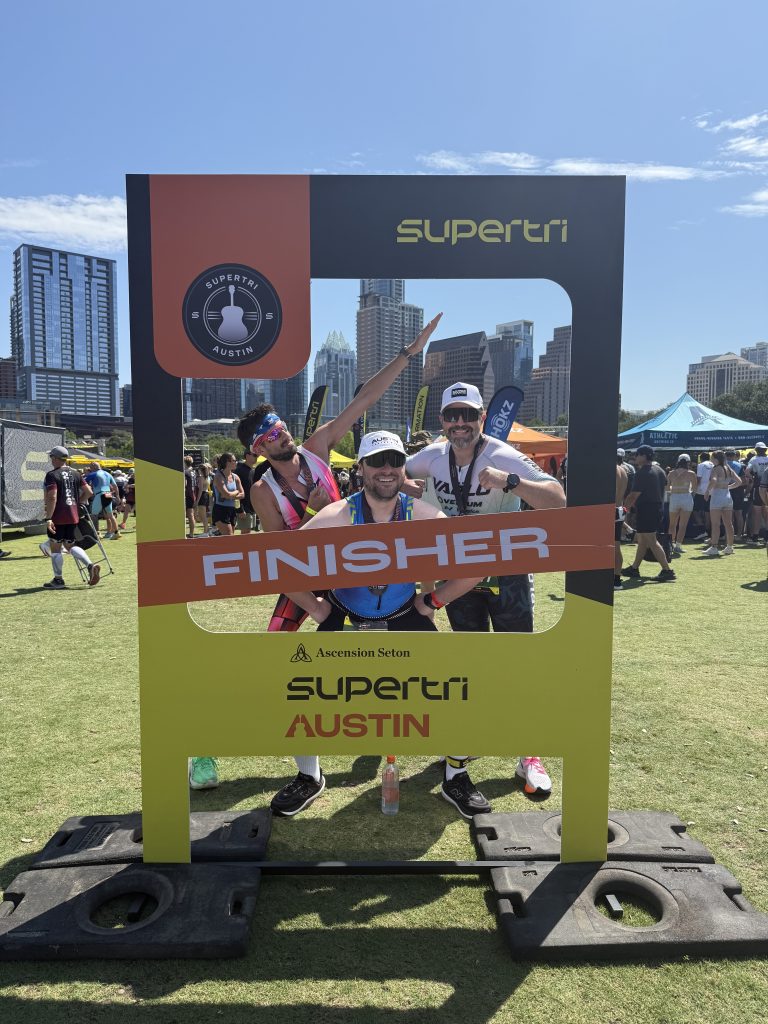
    SuperTri Austin (formerly CapTex Tri) is the new name for what used to be the CapTex Tri, but the feel of the race is still very much the same—fast, local, and competitive. This year I raced the super sprint, not because it fit neatly into a long‑term build, but because I wanted to race alongside Brandon and Preston. It as Preston’s first triathlon.

    That was the right reason to show up.

    Short races like this don’t give you much room to hide. You race what you’ve trained, and whatever gaps exist show up quickly—especially on the run

    The Super Sprint Format

    The super sprint is simple on paper: a short swim, a short bike, and a short run. In practice, it’s aggressive from the gun and unforgiving of mistakes.

    There’s no time to settle in, no long bike to smooth things out, and no chance to pace conservatively. Execution matters immediately.

    That’s what makes it useful.

    Swim: Exactly Where I Wanted to Be

    The swim went as well as I could have hoped.

    I was first out of the water in my age group, which set the tone for the rest of the race. Clean water early matters a lot in a short format, and it allowed me to start the bike in control rather than reacting.

    The focus was simple:

    • Stay relaxed
    • Breathe well
    • Exit the water ready to work

    That part of the race went to plan.

    Bike: Short, Hard, and Controlled

    The bike leg was fast and punchy, with no room to coast.

    In a super sprint, the bike is less about steady power and more about riding hard without panicking. I focused on smooth accelerations, staying composed, and not chasing effort just for the sake of it.

    Racing with Brandon and Preston added to the experience. It sharpens your focus without turning the race into something it doesn’t need to be.

    Run: Where It Fell Apart

    The run is where the race exposed the gap in my preparation.

    I simply hadn’t trained the run well enough for this kind of effort, and it showed almost immediately. What should have been a sharp, controlled push turned into a fight to hold form and pace. In a race this short, there’s no time to recover once things start slipping.

    No mystery here and no excuses—the run fell apart because I didn’t put in the work there.

    That’s the lesson

    The Takeaway: Train the Run

    This race delivered a very clear message:

    If I want to race well, I have to train the run more.

    Short formats don’t allow you to hide behind fitness from other disciplines. They reward specificity and punish neglect. Swim fitness and bike strength can only carry things so far—eventually the run demands its due.

    That’s something I’ll address heading into the next block.

    Racing With Friends Still Made It a Win

    Even with a fading run, racing this event alongside Brandon and Preston made the day worth it.

    Sharing the course with people you respect changes the tone of the race. The pressure comes down, the experience goes up, and the finish line feels more meaningful regardless of the clock.

    That matters.

    Final Thoughts

    I crossed the line in 1:02:19, tired, honest about what went wrong, and clear about what needs work next.

    SuperTri Austin (CapTex) was exactly what I needed—a fast effort, a reality check, and a reminder that racing doesn’t always have to be about perfect execution. Sometimes it’s about learning quickly and moving forward with intention.

    Next one: SuperTri Kerville and a better run prep.

  • My 2026 Race Schedule — Building Toward Ironman Jacksonville

    My 2026 Race Schedule — Building Toward Ironman Jacksonville

    My 2026 Race Schedule — Building Toward Ironman Jacksonville

    Every year I sit down and map out my race calendar before I do anything else. 2026 is a building year for me

    Here is my full 2026 race schedule, what I am targeting at each event, and how each one fits into the bigger picture.

    Race 1 — Ironman 70.3 Dallas/Little Elm | March 15, 2026 ✓ COMPLETED

    Distance: 1.2 mile swim / 56 mile bike / 13.1 mile run

    Dallas was personal before it even started. At Ironman 70.3 Galveston I made the decision not to race when the swim was cancelled and the weather turned ugly. I questioned that decision for a long time afterward. Could I handle hard conditions? Would I fold when things got difficult?

    Dallas answered that question.

    The swim was cancelled again — dangerous winds on race morning. Headwinds hammered the bike course. Everything that could make a race harder, did. And I finished. Not perfectly — I underfueled on the bike and my run split showed it — but I crossed that finish line and proved something to myself that no good-weather race ever could have.

    What I learned: Finishing Dallas in those conditions mattered more than the time on the clock. I also learned that bike nutrition is non-negotiable — I had two bottles planned and only got through one. I rebuilt my entire fueling protocol after this race. Every event after Dallas is a chance to execute that plan the right way

    Dallas was tough but reminded me to never quit. One rotation of the pedals at a time, and one foot in front of the other.

    Race 2 — Super Sprint Triathlon | May 25, 2026 (Memorial Day) ✓ COMPLETED

    Distance: ~400m swim / ~10km bike / ~2.5km run

    This one is special for two reasons. First, I will be racing for the first time with my new team, Team Varlo. There is something different about racing with a team behind you — a kit that means something, people cheering your name, the sense that you are part of something bigger than your own finish time. I am looking forward to representing the team well on Memorial Day.

    Second — and this is the part I am most excited about — I am pacing a friend from work who is doing his first triathlon. I remember exactly what that felt like. The nerves, the uncertainty, wondering if you have what it takes to get through all three disciplines. Being the person who helps someone else cross their first triathlon finish line is a privilege I do not take lightly.

    My goal: Get my friend to that finish line with a smile on his face. Everything else is secondary.

    Training approach: I am in a cut phase through early June focused on leaning out while maintaining performance. The super sprint falls at the end of that block so I will arrive lighter and sharp. No taper needed at this distance — I will race off normal training and save my legs for the job of pacing

    Race Recap: Finished in 1:02:19 — a fast swim, a fading run, and a clear lesson learned at SuperTri Austin (CapTex)

    Race 3 — Kerrville Triathlon | September 27, 2026 (Race cancelled)

    Distance: Sprint

    Goal: 1:10–1:15, with a focus on a stronger run than Austin

    Update: This race ended up getting cancelled due to storms in the area. It’s a great race, but unfortunately we’ll have to try again next year

    Kerrville is a well-known Texas triathlon set in the beautiful Hill Country. But this year it means more than just a race on my calendar. The Kerrville area was devastated by catastrophic flooding in 2025 — the race was cancelled and the community suffered enormously. I am racing this year specifically to show up for that community, support local businesses, and be part of the recovery. If you are a Texas triathlete looking for a reason to choose a race this fall, this is it.

    The bike course is known for its rolling Hill Country terrain which will be excellent training for Jacksonville. Heat will be a factor in late September but my hydration and sodium protocol will be fully dialed in by then.

    My goal: Execute my nutrition plan perfectly. Dallas showed me what happens when I do not. Kerrville is my chance to race a clean, well-fueled event and build confidence heading into the Ironman build — and to be part of something bigger than just a finish time.

    Training approach: The BPN Hybrid strength and triathlon program runs through early August, followed by a sprint-focused block through September. I will arrive at Kerrville with strong bike legs and a dialed nutrition protocol.

    The Bigger Picture — Ironman Jacksonville 2027

    Every race on this list is preparation for one thing: Ironman Jacksonville on May 16, 2027.

    Dallas taught me about nutrition execution. The super sprint will sharpen my transitions and race fitness. Kerrville will test my ability to race a complete, well-executed event in Texas heat. Georgetown will give me a running benchmark. Each race is a building block.

    My Ironman build starts January 11, 2027 — 18 weeks out from Jacksonville. By then I need an FTP of 200w on the bike, a dialed nutrition protocol, and the mental confidence that comes from executing races well. That is what 2026 is for.

    I have a prior Ironman DNF at IM Texas due to extreme wind conditions. Jacksonville is where I finish what I started. Everything between now and May 16, 2027 is in service of that goal.

    Follow Along

    I will be posting recaps after each race this year — what went well, what did not, what I would do differently. If you are training for your first triathlon or working toward your own Ironman, follow along. The journey is more honest than most race reports you will read.

    Questions about any of these races or how I am preparing? Drop a comment below.

    — Andrew | My Life With AE | Competitive triathlete, 10+ years racing, Ironman Jacksonville May 2027

  • The Strength Training Plan That Actually Works for Triathletes (3 Days, No Fluff)

    Disclosure: This post contains affiliate links. If you click and buy, I earn a small commission at no extra cost to you.

    When I started training for half iron distance triathlon I wanted to keep strength training in the mix. The problem is that most triathlon training plans either ignore the gym entirely or bolt on a generic full body routine that leaves you too wrecked to swim, bike, or run the next day.

    After experimenting with different approaches I landed on a three day structure that has worked consistently: one heavy compound day, one supporting accessory day, and one plyometrics day. Each session happens before my swim workout since I am already at the gym — that logistics decision alone made it sustainable week after week.

    This is not a bodybuilding program. It is not powerlifting. It is a strength plan built specifically around the demands of half iron distance triathlon — building force production and durability without accumulating so much fatigue that your swim, bike, and run training suffers.

    Why Triathletes Need Strength Training

    Triathlon is an endurance sport but endurance alone does not make you fast or resilient. Strength training fills three specific gaps that swim, bike, and run training cannot.

    Injury prevention. The repetitive nature of triathlon training — thousands of pedal strokes, thousands of running steps — creates muscular imbalances over time. Strength work corrects those imbalances before they become injuries.

    Force production. A stronger athlete applies more force per pedal stroke and per running stride. That means more speed for the same effort — exactly what you want late in a race when your form starts to break down.

    Late race durability. The run at the end of a triathlon is not just about aerobic fitness. It is about whether your legs can still produce power after hours of swimming and cycling. Strength training builds the muscular endurance to hold form when everything else is telling you to fall apart.

    The Logistics — Why Before Your Swim

    I do all three strength sessions before my swim workout. This sounds counterintuitive but it works for a simple reason: I am already at the gym.

    The biggest enemy of consistent strength training is friction. If your gym session requires a separate trip, a separate time slot, and a separate mental commitment on top of already training twice a day, it will be the first thing that gets dropped when life gets busy.

    Pairing strength with your swim session eliminates that friction. You are already there, already in training mode, already dressed. Lift first, swim after. The swim actually serves as an active recovery flush for the muscles you just worked — the water loosens everything up.

    One important note: keep your strength sessions to 45-60 minutes maximum before a swim. You are not trying to destroy yourself in the gym — you are trying to build durable strength that supports your triathlon performance.

    Day 1 — Heavy Compound Day

    Purpose: Build raw strength and force production across the entire body.

    This is your heaviest day. Compound movements that recruit the most muscle mass, performed at challenging weights with full recovery between sets. The goal is strength — not pump, not cardio, not fatigue. You should leave this session feeling worked but not wrecked.

    Key exercises:

    Squat (back or front) — 4 sets x 4-6 reps

    Deadlift or Romanian deadlift — 3 sets x 5 reps

    Bench press — 4 sets x 4-6 reps

    Barbell or dumbbell row — 4 sets x 6 reps

    Overhead press — 3 sets x 6 reps

    Rest 2-3 minutes between sets. This is not a circuit. Full recovery between heavy sets is what drives strength adaptation.

    Day 2 — Supporting / Accessory Day

    Purpose: Address the specific muscular imbalances and weak points that triathlon creates.

    This is the session most triathletes skip and the one that matters most for injury prevention. Single leg work, hip stability, shoulder health, and posterior chain strength. The muscles that keep you running well at mile 10 of a half iron run are built here.

    Key exercises:

    Single leg Romanian deadlift — 3 sets x 8 each leg

    Hip thrust or glute bridge — 4 sets x 10-12 reps

    Bulgarian split squat — 3 sets x 8 each leg

    Lateral band walks — 3 sets x 15 each direction

    Shoulder external rotation / face pulls — 3 sets x 15

    Calf raises — 3 sets x 15-20 (single leg if possible)

    The hip thrust and single leg work are non-negotiable. Weak glutes are behind most of the running injuries I see in triathletes — hip thrust fixes that.

    Day 3 — Plyometrics Day

    Purpose: Build explosive power and running economy — the ability to produce force quickly.

    This is the session that transfers most directly to race day performance. Plyometric training teaches your muscles to produce force rapidly — which improves running economy, reduces ground contact time, and helps you maintain form when fatigued.

    Key exercises:

    Box jumps — 4 sets x 5 reps (full reset between each rep)

    Broad jumps — 3 sets x 5 reps

    Single leg hops — 3 sets x 8 each leg

    Lateral bounds — 3 sets x 8 each direction

    Depth drops — 3 sets x 5 (step off box, land softly, no jump)

    Jump rope — 3 x 60 seconds

    Plyometrics require full recovery between sets — these are power exercises, not cardio. If you are breathing hard between sets you are going too fast. Rest 60-90 seconds minimum.

    How to Fit This Into Your Triathlon Training Week

    I run each strength session directly before a swim workout on three different days of the week. A sample week might look like:

    Monday: Mobility/Heavy compound + swim

    Wednesday: Supporting / accessory + swim

    Friday: Plyometrics + swim

    Tuesday, Thursday, Saturday: Bike and run sessions

    Sunday: Long run or rest

    The key is that your hardest bike and run days do not follow your heaviest strength days. Give your legs at least one night of recovery between a heavy squat session and a hard interval run.

    What to Reduce as Your Race Gets Closer

    Six to eight weeks out from your A race, start reducing strength volume. Drop sets and reps, keep the intensity. Four weeks out, cut plyometrics entirely. Two weeks out, move to maintenance only — one light full body session per week just to stay sharp.

    The strength you built over months does not disappear in two weeks. Trust the work you did and let your body arrive at race day fresh.

    Bottom Line

    Three days, paired with your swim sessions, focused on compound strength, single leg stability, and explosive power. That is the entire plan. It is not complicated but it is consistent, and consistency is what builds the durable athlete that holds form at mile 10 of a half iron run.

    Questions about how to adapt this for your specific training schedule or race distance? Drop a comment below.

    — Andrew | My Life With AE | Competitive triathlete, 10+ years racing, Ironman Jacksonville 2027
  • What I Actually Listen To During Triathlon Training (And Why Most Races I Listen to Nothing)

    Disclosure: This post contains affiliate links. If you click and buy or sign up, I earn a small commission at no extra cost to you. I only recommend things I personally use.

    Most triathlons do not allow headphones. Depending on race distance you are looking at anywhere from 90 minutes to 17 hours alone with your own thoughts, no music, no podcasts, no audiobooks. Just you, the course, and whatever is going on in your head.

    Because of that rule I do most of my training without headphones too — it is the only way to genuinely prepare for what race day feels like. Long rides, track workouts, open water swims. All silent.

    But on easy recovery rides, long drives to races, and the occasional relaxed training day, I listen to audiobooks. And my taste is all over the place — fantasy series, business books, astrophysics, motivational reads. If it keeps my brain engaged for a two hour easy ride, it makes the list.

    Here is what I have actually been listening to, and why I think audiobooks are one of the most underrated tools in a triathlete’s training toolkit.

    Why Audiobooks Work for Endurance Training

    Easy aerobic rides are supposed to be easy. Zone 2, conversational pace, low heart rate. The problem is that easy is boring, and boring leads to going too hard just to feel like you are doing something.

    An audiobook solves that problem. When you are genuinely engaged in a story or an idea, you stop thinking about your power output and just ride. Hours pass. Easy stays easy. Your aerobic base gets built without you fighting against the boredom of it.

    I have ridden easy for three hours on a book I could not put down. Without something to listen to that same ride would have taken everything I had mentally to stay in zone 2.

    What I Am Currently Listening To — Dungeon Crawler Carl

    I did not expect to get hooked on a fantasy series about a man and his cat navigating a post-apocalyptic dungeon. And yet here we are.

    Dungeon Crawler Carl by Matt Dinniman is the series I have been working through on easy rides. It is funny, fast-paced, and completely ridiculous in the best possible way. The narrator is excellent and the books are long enough that a two hour ride barely makes a dent in a single one. There are currently 8 books in the series with 10 planned total — that is a massive amount of listening content, more than enough to carry you through an entire Ironman training block

    If you are looking for something that makes easy training genuinely fun rather than something to endure, this series is it. It has nothing to do with triathlon and everything to do with making the miles go by.

    Search “Dungeon Crawler Carl” on Audible to find the full series.

    Best Motivational Listen — Can’t Hurt Me by David Goggins

    If you want to feel like your training is not hard enough, listen to David Goggins.

    Can’t Hurt Me is not a comfortable listen. Goggins is brutally honest about his past, his training, and what he believes most people are capable of if they stop making excuses. I do not agree with everything he says but I have never finished a session after listening to this book without feeling like I could have pushed harder.

    The audiobook version is particularly good because Goggins himself participates in extended conversations with the author between chapters — it feels less like a book and more like a podcast with someone who has genuinely done things most people only talk about.

    Best for: Pre-race week listening. Long training days when your motivation is low. Any day you are thinking about skipping a workout.

    Search “Can’t Hurt Me David Goggins” on Audible.

    Best Mindset Shift — The Subtle Art of Not Giving a F*ck by Mark Manson

    The title is provocative but the actual content is surprisingly practical. Manson’s core argument — that choosing what to care about is more important than trying to be positive about everything — resonates deeply with endurance sports.

    Triathlon involves a lot of suffering. Bad races, missed training blocks, injuries, days where everything falls apart. The athletes who last are not the ones who pretend it is all fine — they are the ones who have figured out what actually matters and let the rest go.

    This book helped me reframe some of my thinking around my AE diagnosis and what I can and cannot control. Worth a listen regardless of whether you are an athlete.

    Search “The Subtle Art of Not Giving a F*ck” on Audible.

    Best Business Listen — The 4-Hour Workweek by Tim Ferriss

    I rotate business books into my training listening because endurance sports and entrepreneurship share more DNA than people realize. Both require systems thinking, long-term planning, and the ability to do uncomfortable things consistently.

    The 4-Hour Workweek is the book that got a lot of people thinking differently about how they spend their time and what passive income actually looks like in practice. Some of it is dated but the core ideas around automation and building systems that work without you are as relevant now as when it was written.

    Best for: Long easy rides where you want your brain working on something while your legs turn over.

    Search “4 Hour Workweek Tim Ferriss” on Audible.

    Best Science Listen — Astrophysics for People in a Hurry by Neil deGrasse Tyson

    Short, dense, and genuinely fascinating. Neil deGrasse Tyson has a gift for making complex ideas feel accessible without dumbing them down, and this book is short enough that you can finish it across a few easy rides.

    There is something about thinking about the scale of the universe while grinding out a long ride that puts the suffering in perspective. Highly recommended for the triathlete who wants their easy days to feel less like wasted time and more like an opportunity to learn something.

    Search “Astrophysics for People in a Hurry” on Audible.

    How to Get All of These for Almost Nothing — Audible Free Trial

    If you are not already on Audible, the free trial is the best deal in endurance sports entertainment.

    Audible’s free trial gives you access to their full library and includes free credits to keep books even if you cancel. For a triathlete with hundreds of hours of training ahead, that is an easy decision. I use Audible for almost all of my audiobook listening and have for years.

    Every book on this list is available on Audible. Start with whichever one matches where you are right now — grinding through a hard training block (Goggins), looking for something fun on easy days (Dungeon Crawler Carl), or wanting a mindset reset (Manson).

    Start your free audible trial here!

    Bottom Line

    Train without headphones when you can — it prepares you for race day and builds mental toughness. But on easy days, use the time to feed your brain. The miles go faster, the easy stays easy, and you finish your ride having actually learned or experienced something.

    What are you currently listening to? Drop it in the comments — I am always looking for the next great listen.

    — Andrew | My Life With AE | Competitive triathlete, 10+ years racing, Ironman Jacksonville 2027

  • Best GPS Watches for Triathlon — Why I Switched From Apple Watch to Garmin (And What I Would Buy Next)

    Disclosure: This post contains affiliate links. If you click and buy, I earn a small commission at no extra cost to you. I only recommend products I personally use or have researched thoroughly.

    Best GPS Watches for Triathlon — Why I Switched From Apple Watch to Garmin (And What I Would Buy Next)

    I learned the hard way that not every GPS watch is built for endurance sports. My first multisport watch was an Apple Watch Series 1. It tracked my runs, looked great, and did everything a smartwatch should do — right up until it died halfway through a half marathon. Dead battery, no data, no finish line split. That was the last time I relied on an Apple Watch for a race.

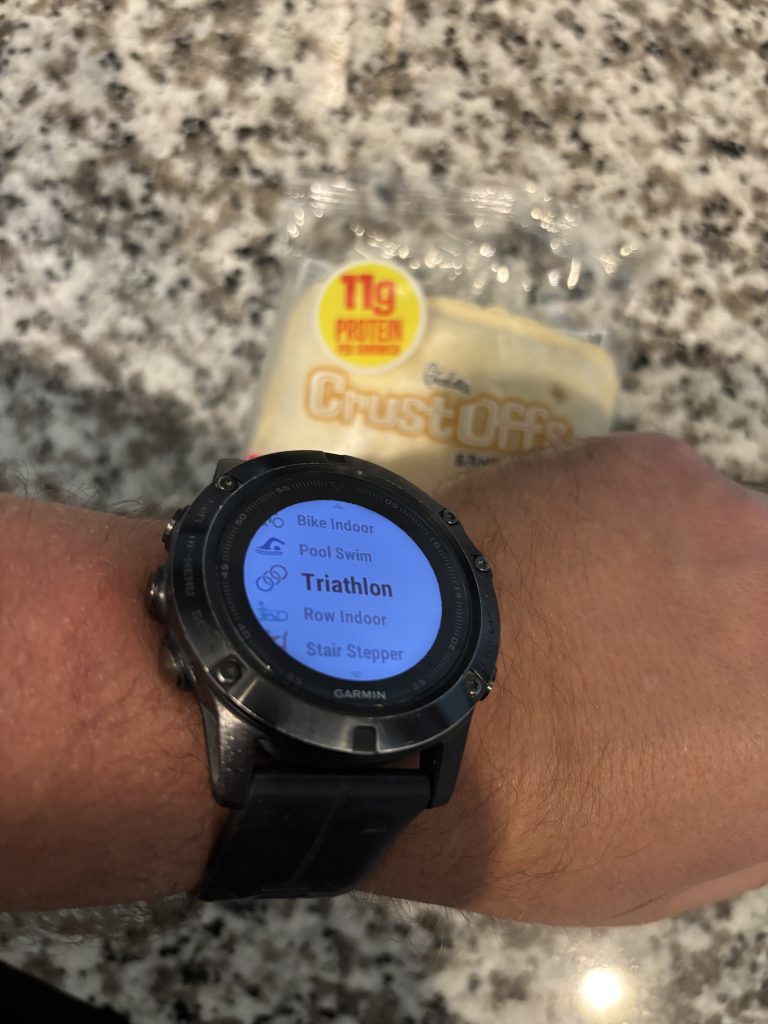
    I switched to the Garmin Fenix 5 and have been wearing it for over five years. It has been on my wrist through sprint triathlons, half iron distance races including Ironman 70.3 Dallas, open water swims, and thousands of miles of training. It is the piece of gear I trust more than almost anything else in my kit.

    In this post I am going to walk you through what I have used, what I would recommend at different price points, and what I am personally planning to buy next — the Garmin Fenix 7 Solar — as soon as my bonus hits.

    Quick Picks at a Glance

    Best overall for triathletes: Garmin Fenix 7 Solar

    Best mid-range: Garmin Forerunner 965

    Best budget entry: Garmin Forerunner 255

    Best Apple ecosystem option: Apple Watch Ultra 2

    What I have worn for 5+ years: Garmin Fenix 5

    Why Apple Watch Does Not Work for Triathlon

    The Apple Watch Series 1 died on me at mile 7 of a half marathon. That was enough for me.

    Battery life is the dealbreaker. The original Apple Watch was rated for about 18 hours of general use — which sounds fine until you realize that GPS tracking in workout mode drains it dramatically faster. I did not make it through a half marathon. For a triathlon where you might be racing for 5-17 hours depending on distance, that is simply not workable.

    Apple has improved significantly with the Apple Watch Ultra 2, which now offers legitimate multi-sport tracking and much better battery life. If you are deeply embedded in the Apple ecosystem and want to stay there, the Ultra 2 is the first Apple Watch I would actually consider for triathlon. But it comes at a premium price and still does not match Garmin for triathlon-specific features.

    For most triathletes, Garmin is the answer. Here is why.

    What I Have Worn for close to 10 Years — Garmin Fenix 5

    I have been racing and training with the Garmin Fenix 5 for close to ten years. Here is my honest take.

    The Fenix 5 was built for endurance athletes and it shows. Battery life in GPS mode runs 24 hours — enough for a full Ironman with room to spare. The multisport mode lets you move seamlessly between swim, bike, and run with a single button press, which is exactly what you need in a triathlon transition.

    After ten years of daily wear, pool swims, open water swims, long rides, and races, it still works perfectly. The screen has scratches. The band has been replaced once. The watch itself is bulletproof.

    What it lacks compared to newer models: No solar charging, older maps, no multiband GPS. It is a 2017 watch and it shows in a few areas. But for a triathlete who just needs reliable multisport tracking and battery life that lasts through any race, it still does the job.

    The Fenix 5 is discontinued but you can still find it used or refurbished. If budget is a concern it is worth considering — just know you are buying older technology. Facebook marketplace is a great place to look for these.

    What I Am Buying Next — Garmin Fenix 7 Solar

    Price range: $599-$899 depending on size and edition

    I am saving for the Fenix 7 Solar. This is the watch I would buy today if I were starting fresh.

    The solar charging is the headline feature and it is genuinely meaningful for endurance athletes. In training mode with solar assist, battery life extends significantly beyond the standard GPS mode rating — on a sunny Texas ride you are adding meaningful charge just by being outside. For Ironman-distance racing and big training weeks, that matters.

    The Fenix 7 also adds multiband GPS for significantly improved accuracy, a touchscreen alongside the traditional buttons, and Garmin’s latest health monitoring features including HRV status and improved sleep tracking. It is a meaningful upgrade from the Fenix 5 in almost every area.

    Who it is best for: Serious triathletes who want the best multisport watch on the market and are willing to pay for it. If you are training for a half or full Ironman, this is the one to get.

    Search “Garmin Fenix 7 Solar” on Amazon for current pricing — prices vary by size (47mm vs 51mm) and edition.

    Best Mid-Range Option — Garmin Forerunner 965

    Price range: $499-$599

    If the Fenix 7 price is hard to swallow, the Forerunner 965 gives you most of the same triathlon functionality at a lower price point. It has full multisport mode, AMOLED display, multiband GPS, and excellent battery life. The main difference from the Fenix line is the build — the Forerunner is lighter and less rugged, which some athletes prefer for racing.

    Who it is best for: Triathletes who want premium GPS features without the Fenix price tag. Excellent choice for sprint through half iron distance racing.

    Search “Garmin Forerunner 965” on Amazon for current pricing.

    Best Budget Entry — Garmin Forerunner 255

    Price range: $249-$349

    For athletes just getting into triathlon who do not want to spend $600 on a watch, the Forerunner 255 is a legitimate starting point. It has multisport mode, solid GPS accuracy, and battery life that will handle any sprint or Olympic distance race comfortably. It lacks some of the advanced training metrics of the higher-end models but gives you everything you need to race and train effectively.

    Who it is best for: First-time triathletes or athletes on a budget who still want a reliable Garmin multisport watch.

    Search “Garmin Forerunner 255” on Amazon for current pricing.

    What to Look For in a Triathlon GPS Watch

    Multisport mode is non-negotiable. You need a watch that can track swim, bike, and run as separate activities and transition between them quickly. Not all GPS watches have this.

    Battery life matters more than you think. For sprint distance you need 2-3 hours. For half iron you need 5-8 hours. For full Ironman you need 12-17 hours. Check the GPS mode battery rating before you buy.

    Open water swim tracking. Make sure your watch supports open water swimming, not just pool swimming. Most Garmin multisport watches do but always verify.

    Bike computer compatibility. If you use a separate bike computer like I do, make sure your watch can connect to your power meter and heart rate monitor simultaneously.

    Bottom Line

    If you are serious about triathlon, get a Garmin. The Apple Watch taught me that lesson at mile 7 of a half marathon and I have not looked back in five years. My Fenix 5 has been one of the best gear investments I have made and the Fenix 7 Solar is next on my list.

    Budget pick: Forerunner 255. Mid-range: Forerunner 965. Best in class: Fenix 7 Solar. Any of the three will serve you well on race day.

    Questions about which watch is right for your distance or budget? Drop a comment below.

    — Andrew | My Life With AE | Competitive triathlete, 10+ years racing, Ironman Jacksonville 2027

  • What I Actually Eat During a Triathlon (My Race Nutrition Stack)

    Disclosure: This post contains affiliate links. If you click and buy, I earn a small commission at no extra cost to you. I only recommend products I personally use.

    What I Actually Eat During a Triathlon (My Race Nutrition Stack)

    Triathlon nutrition is one of those topics that sounds simple until you bonk at mile 8 of a half-iron run and realize you have no idea what went wrong. I learned this the hard way at Ironman 70.3 Dallas — underfueling and underhydrating on the bike cost me significant time on the run. Since then I have dialed in a nutrition stack that actually works for me, and I want to walk you through exactly what I eat and drink from the morning of a race through the finish line.

    This is not a sponsored post. These are the products I genuinely use because they work for my body and my racing style. Your needs may vary — nutrition is personal — but if you are looking for a starting point, this is mine.

    My Full Race Nutrition Stack at a Glance (What to Buy First

    If you just want the short version, this is the exact nutrition setup I use on race day and in long training sessions:

    Pre‑ride / race morning

      Simple carbs + fat, zero prep, and easy on the stomach.

    On the bike (the most important part)

    On the run:

    • BPN Go Gels early
    • Maurten gels later when my stomach is more sensitive
    • Coke from aid stations in the final miles for fast sugar and caffeine

    If you’re overwhelmed, start with Raw Fuel (100g carbs/hour) + Raw Replenish (sodium/electrolytes) on the bike — that alone will solve most bonking and late‑race fade issues.

    I break down each product below — including how much I use and why — so you can decide what works best for you

    Pre-Race and Long Ride Fuel — Uncrustables

    My go-to before every long ride and race morning: a Smucker’s Uncrustable.

    I know. It sounds absurd. But hear me out — the Uncrustable is easy on the stomach, hits the right carb-to-fat ratio for a pre-effort meal, requires zero preparation, and tastes good enough that you actually want to eat it when your race anxiety has killed your appetite. Elite cyclists have been eating these for years for exactly the same reasons.

    I eat one about 60-90 minutes before a long ride or on race morning. Simple, reliable, no GI issues. That is everything you want from a pre-race meal.

    Pro tip: Keep a box in your freezer and pull one out the night before a race. By morning it is thawed and ready. Find them at H-E-B or any grocery store — no need to buy online. If you enjoy them, Costco sells a huge box of their version for relatively cheap.

    On the Bike — Raw Fuel

    Price range: $40-55 per bag | Target: 100g carbohydrates per hour

    Raw Fuel is the centerpiece of my bike nutrition. I target 100g of carbohydrates per hour on the bike, and Raw Fuel makes hitting that number straightforward.

    100g per hour sounds like a lot — and it is. Most recreational athletes fuel at 30-60g per hour, which is why so many people fall apart on the run. Your body can absorb significantly more than that if you train your gut to handle it, which is exactly what long training rides are for. I practice my race nutrition in training so my body is used to processing that volume of carbohydrates under effort.

    Raw Fuel mixes clean, sits well in my stomach even at high effort, and does not cause the GI distress I have experienced with some other carb products. I mix it into my bottles before the race and sip consistently throughout the bike — every 15-20 minutes rather than waiting until I feel hungry.

    The lesson from Dallas: I underfueled on the bike and paid for it on the run. My run split suffered significantly because my legs ran out of glycogen. Now I treat bike nutrition as non-negotiable — if I am not hitting my carb targets I am borrowing from my run.

    Raw Fuel (100g carbs/hour); I like the Lemon Lime, but the orange flavor is just as good!

    On the Bike — Raw Replenish (Electrolytes and Sodium)

    Price range: $35-45 per tub | Purpose: Sodium replacement and hydration

    Carbohydrates get all the attention in triathlon nutrition but sodium is just as critical, especially racing in Texas heat. Raw Replenish is my electrolyte product of choice — I mix it alongside Raw Fuel in my bike bottles to replace the sodium I am sweating out.

    Sodium matters because it drives thirst, helps your body retain fluid, and prevents the dangerous condition of hyponatremia — drinking too much water without enough sodium to balance it. In a long race in hot conditions, low sodium can be just as dangerous as dehydration.

    I pair Raw Replenish with Raw Fuel in every bottle. They are designed to work together and I have not had a cramping or hydration issue since adding Replenish to my stack.

    Search ” Raw Replenish” on Amazon for current availability.

    On the Bike — BPN Go Bars

    Price range: $35-40 per box | Purpose: Solid food carbohydrates mid-bike

    Liquid carbohydrates alone can get mentally exhausting over a long bike. BPN Go Bars give me something to chew, which helps psychologically on longer efforts. I keep one or two in my jersey pocket and eat them in the first half of the bike when my stomach is still happy to handle solid food.

    BPN (Bare Performance Nutrition) makes clean products without the artificial ingredients and gut-wrecking sugar alcohols you find in a lot of sports nutrition bars. The Go Bar is easy to unwrap with one hand while riding, which matters more than you think when you are in aero position at 20mph.

    I switch away from solid food in the second half of the bike as my body redirects blood flow and digestion gets harder. That is when I lean fully on liquid carbohydrates through the finish of the ride.

    Search “BPN Go Bars” on Amazon for current flavors and pricing.

    On the Run — BPN Go Gels and Maurten

    Price range: BPN $30-35 per box | Maurten $45-55 per box

    By the time I hit the run my stomach has been processing fuel for hours. I switch to gels because they are fast, require no chewing, and are easy to take at aid stations without breaking stride.

    I alternate between BPN Go Gels and Maurten 100 gels depending on how my stomach is feeling. BPN is slightly thicker and more flavorful — good when I want something that feels substantial. Maurten is almost tasteless and extremely easy on the stomach — good late in a race when the thought of eating anything sweet makes you want to quit.

    Maurten gels are worth the price for long course racing. Their hydrogel technology genuinely reduces GI distress compared to traditional gels. If you have ever felt nauseous late in a race from too many sugary gels, Maurten is the answer. They are also the official nutrition sponsor of Ironman races starting in 2026, which means you will find them at aid stations on the course — one less thing to carry or worry about on race day.

    I take a gel every 20-25 minutes on the run, chased with water at the next aid station.

    The Secret Weapon — Coke at Mile 8+

    If you have never grabbed a cup of flat Coke at a late-race aid station, you are missing out on one of triathlon’s oldest tricks.

    Coca-Cola shows up at most half and full iron distance aid stations in the later miles. It delivers fast sugar, a small caffeine hit, and something that actually tastes good when you are deep in the pain cave. I start taking Coke when it is available in the last third of the run — it is not a scientific decision, it is a survival decision, and it works.

    What I Learned From Dallas — The Underfueling Tax

    At Ironman 70.3 Dallas I paid what I call the underfueling tax. I did not hit my carb targets on the bike, I did not drink enough with my sodium, and my run split reflected every mistake I made in those four hours on the bike. You cannot make up for poor bike nutrition on the run — by then the damage is done.

    The stack I have outlined above is what I built after that race. It is not complicated but it requires discipline — eating and drinking on a schedule even when you do not feel hungry, which is almost always.

    The golden rule: Eat before you are hungry. Drink before you are thirsty. By the time you feel either, you are already behind.

    Bottom Line

    My race nutrition stack in order of importance: Raw Fuel for carbohydrates, Raw Replenish for sodium, Uncrustables before long efforts, BPN Go Bars for solid food on the bike, BPN and Maurten gels on the run, and Coke when available late in the race.

    Start with the basics — nail your carb and sodium targets first. Everything else is refinement. Questions about nutrition or what has worked for you? Drop a comment below.

    — Andrew | My Life With AE | Competitive triathlete, 10+ years racing, Ironman Jacksonville 2027