Category: Race recap

  • Why I Switched From a TT Helmet to an Aero Road Helmet (And What It Cost Me

    Why I Switched From a TT Helmet to an Aero Road Helmet (And What It Cost Me

    Disclosure: This post contains affiliate links. If you click and buy, I earn a small commission at no extra cost to you. I only recommend gear I believe in.

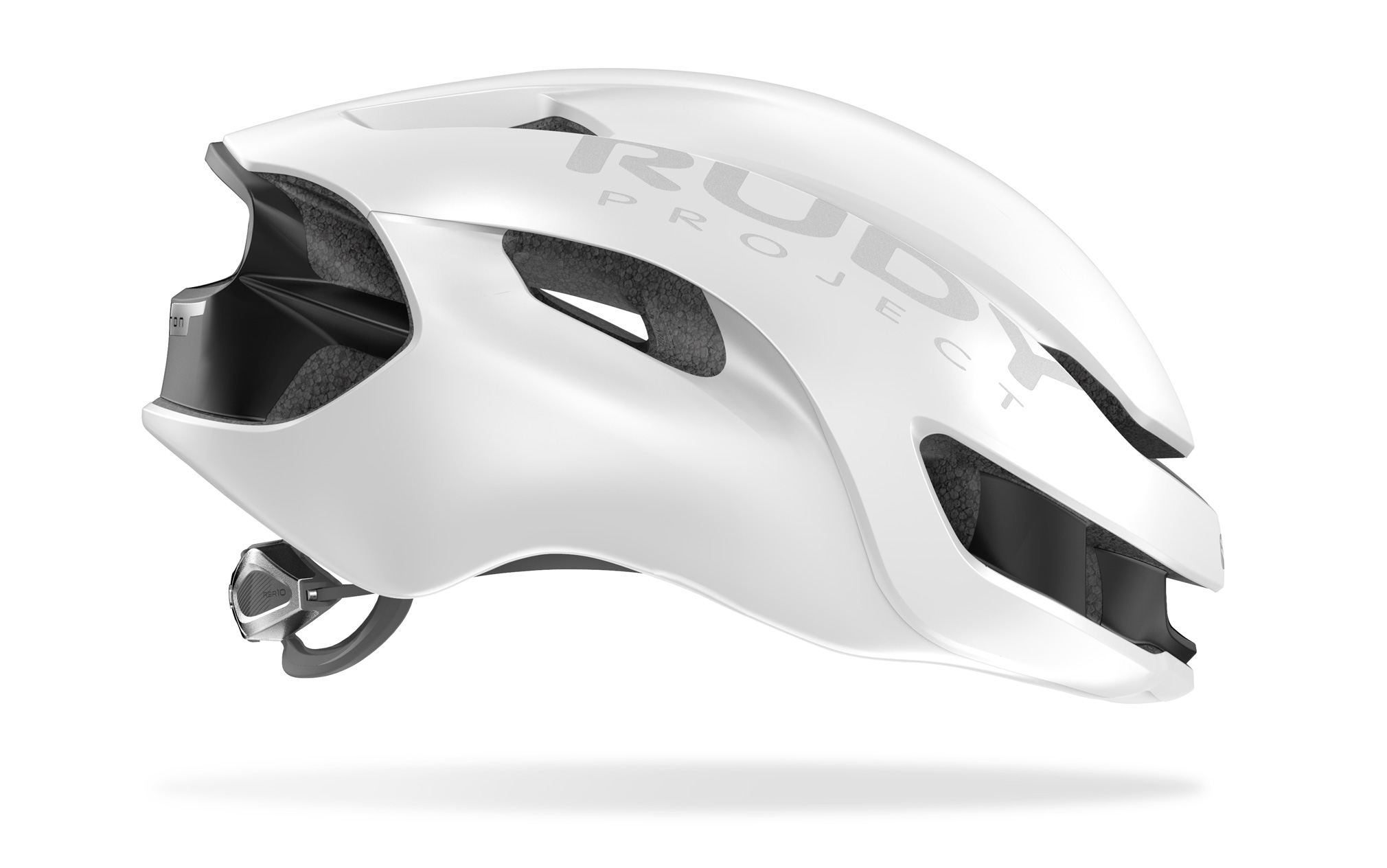
    I raced for years in the Rudy Project Wing — a proper aero TT helmet, the kind with a long tail and a magnetic visor. Then I switched to the Rudy Project Nytron, and I haven’t gone back.

    I’ll be honest about why, because it wasn’t a calculated decision. The Wing was too hot. I was racing and training in Texas, and by the end of the bike leg I was cooked in a way that had nothing to do with my fitness. So I tried something else, and I liked it better.

    That’s the whole story. What’s interesting is that the numbers back it up — the switch I made for comfort turned out to be the faster call for me.


    What a TT Helmet Is Actually For

    Let me not pretend the Wing wasn’t fast. Rudy Project claims closing the front vent saves 12.6 watts at 28mph, and there’s real wind tunnel and CFD work behind that number — this is a helmet with Swiss Side aero development, not marketing copy.

    If your race is short and your position is good, a TT helmet is the fastest thing you can put on your head. That’s just true.

    The catch: a TT helmet is designed for a time trial position — head down, back flat, holding the same shape for the whole ride. It’s not designed to keep you cool, and it’s not designed for the moments when you sit up.


    Why I Switched

    It was too hot. That’s the honest answer. Texas summers are brutal, and a closed-off TT helmet turns into a sauna on a long ride. I wasn’t comfortable, and comfort on a 56 or 112-mile bike leg isn’t a luxury — it’s the thing your whole race is built on.

    I’m not in a TT position most of the time. I’m an age-group triathlete, not a pro. I sit up for aid stations, for climbs, for corners, for the moments my back needs it. A TT helmet is optimized for a position I’m only sometimes in.

    Then I looked at the numbers. The aero difference between a well-ventilated aero road helmet and a TT helmet is roughly 5–10 watts. That’s real, and worth having. But the power you lose when you overheat can easily exceed it — and it compounds over a long course.

    The way I’d put it: the aero helmet was probably costing me more in heat than it was winning me in drag. For me, in my climate, at my level, the cooler helmet was the faster helmet.


    What I Gained and What I Gave Up

    Gained

    • Real ventilation. The Nytron moves air — large front and side intakes feeding internal channels rather than just punching holes in the shell. Cycling News rated its ventilation 8/10 and said it cools better than most aero road helmets. In Texas, that’s the entire point.
    • Comfort over a long course. Lighter, better airflow, and no long tail sitting heavy on my neck after four hours.
    • One helmet for everything. It doesn’t look absurd on a training ride. I don’t swap helmets between race day and Tuesday.

    Given up

    • A chunk of aero. Here’s the honest part: independent testing doesn’t rate the Nytron’s aerodynamics well. Cycling News wind-tunnel tested it and scored it poorly — one of the weaker performers in their test — and road.cc called its aero gains “claimed.” If you’re chasing every watt and you don’t overheat, this is not the helmet I’d tell you to buy.
    • The visor. I ride in sunglasses now, which is arguably more practical, but it’s a different setup.

    The honest summary: the Nytron is a ventilation and comfort play with adequate aero, not a speed play. I chose it because overheating costs me more than drag does.


    Should You Race a TT Helmet?

    It depends on three things, and you can answer all three yourself.

    How hot is your race? Racing somewhere cool, or an early-season event? A TT helmet is a straightforward win. Racing in Texas, Florida, Kona, or anything in summer? The math flips.

    How good is your position, and how long can you hold it? If you’ve had a proper fit and you stay aero for the whole bike leg, a TT helmet rewards that. If you’re sitting up regularly, you’re paying the heat cost without collecting the aero benefit.

    How do you handle heat? This is genuinely individual. Some athletes race TT helmets in Kona without trouble. Some overheat in them in mild conditions. If you know you run hot, you already know your answer.

    The rule I’d give you: if you’re choosing between a fast helmet that cooks you and a slightly slower one that keeps you cool — and your race is long and hot — take the cool one. You can’t spend aero watts you don’t have because your core temperature is through the roof.


    What I’d Buy Today

    If you race in heat and want one helmet for everything: an aero road helmet. The Rudy Project Nytron is what I ride. However, it harder to find thesse days. If you want aero road without giving up as much speed, the Giro Vanquish MIPS is consistently at or near the top of independent aero road helmet tests — that’s the one I’d look at first.

    Check price on the Giro Vanquish MIPS →

    If you race cool conditions or short-course and want maximum speed: a TT helmet. The Rudy Project Wing is what I raced in, and the aero data behind it is legitimate.

    Check price on the Rudy Project Wing →

    If you want the current flagship: Rudy Project’s Wingdream is their top aero helmet, launched in 2024. By their numbers it beats the Wing by 13.9 watts. I haven’t ridden it — that’s research, not experience, and I’d want you to know the difference.


    Bottom Line

    I gave up a genuinely fast TT helmet for a cooler one, and I’m faster for it — because I stopped overheating.

    The fastest helmet is the one that lets you hold your power for the whole ride. For me in Texas, that isn’t the TT lid.

    If you race in heat, think hard before you buy the fastest helmet in the wind tunnel. Wind tunnels don’t have a 104-degree Texas afternoon in them.

    Questions about your race or your climate? Drop a comment below.

    — Andrew | My Life With AE | Competitive triathlete, 10+ years racing, Ironman Jacksonville 2027
  • Black Friday Triathlon Gear Deals: What’s Actually Worth Buying

    Disclosure: This post contains affiliate links. If you click and buy, I earn a small commission at no extra cost to you. I only recommend gear I believe in.

    Last updated: November 2026 — prices and picks get revised as the sale unfolds. Bookmark this and check back.


    Every November the same thing happens. Triathlon gear goes on sale, the discounts look enormous, and half of it is stuff you’ll never use — or stuff that was marked up in October so it could be “cut” in November.

    I’ve been racing for 10+ years and I’m currently deep in a build toward Ironman Jacksonville 2027. I buy my own gear. Some of it I’ve bought new, some secondhand, and I’ve made enough mistakes to know which deals are real.

    Here’s what I’d actually buy this Black Friday, sorted by what you’re trying to spend.


    What to Buy at Every Budget

    Under $50: the stuff you’ll actually use →
    $50–$150: the upgrades that matter →
    $150–$400: where the real value is →
    $400+: only if you’re genuinely committed →


    Under $50 — The Stuff You’ll Actually Use

    These are cheap, they get used constantly, and they almost never go on meaningful sale the rest of the year.

    Trainer tire — $30–$45

    If you ride a wheel-on trainer, you need one, and the reason is boring: your road tire will get shredded. A dedicated trainer tire lasts years and costs less than the rear tire it saves.

    Check current price →

    Anti-chafe balm — $15–$25

    Non-negotiable for anything over 70.3 distance, and it’s the difference between finishing comfortably and finishing miserably. Buy two. I’ve been a big fan of Body Glide for years.

    Check current price →

    Swim goggles (2-pack) — $25–$40

    Goggles are consumable. The strap goes, the lens gets scratched, they fog permanently. A two-pack on sale is the correct move.

    Check current price →

    Race belt — $12–$20

    You will lose yours. Everyone does.

    Check current price →


    $50–$150 — The Upgrades That Matter

    Cycling shorts (second pair) — $50–$90

    If you own one pair of decent shorts, this is your highest-value purchase of the sale. Two pairs in rotation means one is always clean, and on a 25-week build that matters more than any upgrade you can buy.

    I have two pairs of the Bikewa Men’s Bike Shorts 3D Padded Cycling Road Biking Mountain Riding Biker Bicycle UPF 50+ Cycle Shorts Zipper Pockets. I highly recommend them.

    Check current price →

    Running shorts — $30–$60

    Quick-dry, zipper pocket, correct inseam. Not exciting. Gets worn four times a week.

    I really like the MIER shorts. They are light weight and stylish.

    Check current price →

    Bike helmet — $60–$150

    A good helmet is the single best safety-to-price ratio in this sport, and the mid-tier ones go on real discount in November because brands clear colors before the new season.

    Read why I switched from a TT helmet to an aero road helmet →

    Swim paddles and fins — $30–$60

    If you’re doing any pool work in the off-season, these change what you can accomplish in a short session.

    Check current price →


    $150–$400 — Where the Real Value Is

    This is the band where Black Friday actually saves you money, because these are the products with real margin to cut.

    Saris M2 smart trainer — $150–$300

    This is what I ride. I bought mine used off Facebook Marketplace for less than new, and it does everything a triathlete needs — ERG mode, power broadcast, holds a structured workout fine.

    If you want new and on sale, this is the one to watch.

    Read my full trainer comparison →

    Check current price →

    Wahoo KICKR Snap — $250–$350

    The wheel-on format with a warranty. Good middle ground if you don’t want to gamble on the used market.

    Check current price →

    Bike computer (Garmin Edge / Wahoo ELEMNT) — $200–$350

    If you’re still using your phone on the bars, this is the upgrade that changes how you train — lap data you can actually read mid-effort, and battery that survives a long ride.

    Read my GPS watch picks →

    Massage gun — $100–$250

    The one recovery tool I’d buy before any other. It doesn’t replace sleep or actual recovery, but it does make the difference on a heavy training week.

    Check current price →

    Compression boots — $200–$400

    Genuinely useful, genuinely expensive. Watch these closely — they’re a frequent Black Friday discount item, and the off-brand ones are usually the same hardware.

    Check current price →


    $400+ — Only If You’re Genuinely Committed

    I’d be careful here. Big-ticket items get “discounted” in ways that don’t mean much, and the resale market is strong if you’re patient.

    Wahoo KICKR Core — $500–$700

    I trained an entire Ironman block on one. Direct drive, holds watts precisely, no tire wear. If you’re building toward a full Ironman and doing serious indoor volume, this is the piece worth spending on.

    Read my full review →

    Check current price →

    Wheel set — $600+

    Worth it if you’re racing seriously and already have everything else. Not worth it if you’re still deciding whether you like this sport.


    What I’d Skip

    Being honest is more useful than being comprehensive. Here’s what I wouldn’t buy on Black Friday:

    Wetsuits. You already have my wetsuit recommendations and the weather’s turning — but wetsuit sizing is unforgiving, returns are painful, and a “deal” on the wrong size is a waste. Buy a wetsuit when you’ve got time to try it, not when it’s marked down.

    Tri bikes. Discounts are smaller than they look, the fit matters more than the price, and a bike bought in a rush is a bike you’ll resent.

    Nutrition in bulk. It expires. Buy a season’s worth, not a year’s.

    Anything you haven’t researched. A discount on the wrong product is still the wrong product. If you’re not sure, read the review first and buy next month.


    How I Shop Black Friday

    Check the price history. A “40% off” tag means nothing without knowing what it cost in September. CamelCamelCamel does this for Amazon.

    Buy from categories you’ve already decided on. Write your list in October, buy in November. Buying because something’s on sale is how gear accumulates.

    Don’t wait for the perfect deal. The deepest discounts are on Cyber Monday and on random items nobody wanted. The gear you actually need sells at a good price on Black Friday and is gone by Sunday.


    Bottom Line

    The best Black Friday purchase is the thing you were going to buy anyway, at a better price. Everything else is just stuff.

    If you’re building toward a full Ironman, spend on the trainer and the shorts rotation. If you’re doing sprints, grab the cheap consumables and save the rest.

    Either way — buy the one you’ll actually use.

    Questions about what to grab for your specific race distance? Drop a comment below.

    — Andrew | My Life With AE | Competitive triathlete, 10+ years racing, Ironman Jacksonville 2027

  • SuperTri Austin (CapTex) Super Sprint Race Recap — A Fast Swim, a Fading Run, and a Clear Lesson

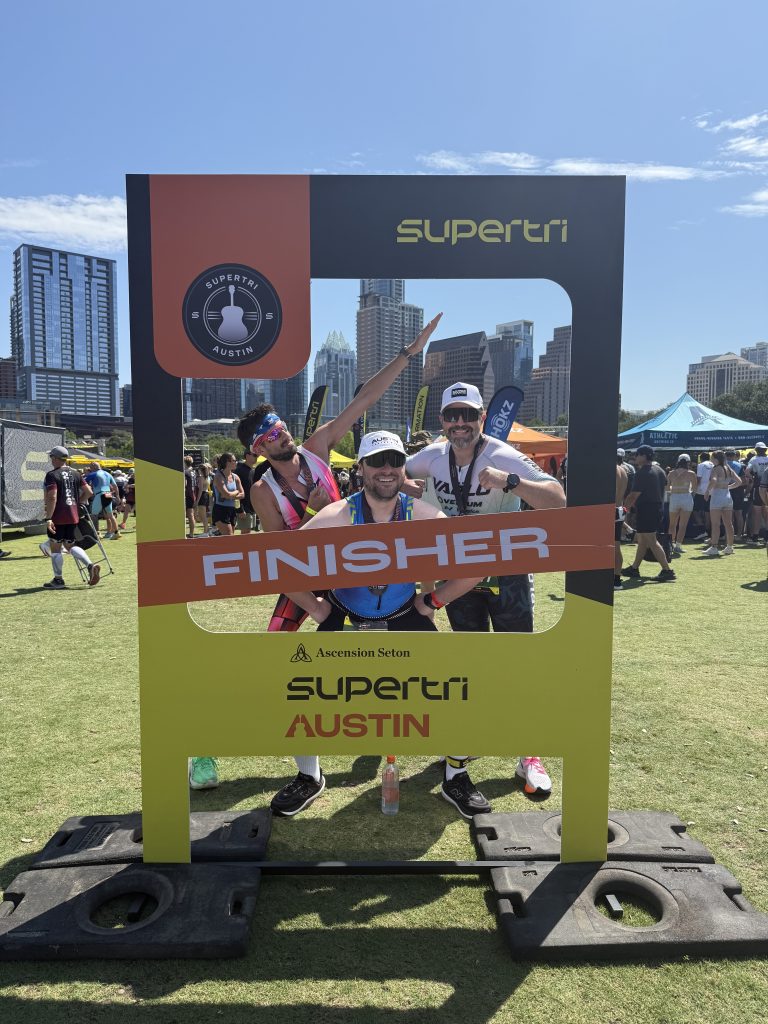
    SuperTri Austin (formerly CapTex Tri) is the new name for what used to be the CapTex Tri, but the feel of the race is still very much the same—fast, local, and competitive. This year I raced the super sprint, not because it fit neatly into a long‑term build, but because I wanted to race alongside Brandon and Preston. It as Preston’s first triathlon.

    That was the right reason to show up.

    Short races like this don’t give you much room to hide. You race what you’ve trained, and whatever gaps exist show up quickly—especially on the run

    The Super Sprint Format

    The super sprint is simple on paper: a short swim, a short bike, and a short run. In practice, it’s aggressive from the gun and unforgiving of mistakes.

    There’s no time to settle in, no long bike to smooth things out, and no chance to pace conservatively. Execution matters immediately.

    That’s what makes it useful.

    Swim: Exactly Where I Wanted to Be

    The swim went as well as I could have hoped.

    I was first out of the water in my age group, which set the tone for the rest of the race. Clean water early matters a lot in a short format, and it allowed me to start the bike in control rather than reacting.

    The focus was simple:

    • Stay relaxed
    • Breathe well
    • Exit the water ready to work

    That part of the race went to plan.

    Bike: Short, Hard, and Controlled

    The bike leg was fast and punchy, with no room to coast.

    In a super sprint, the bike is less about steady power and more about riding hard without panicking. I focused on smooth accelerations, staying composed, and not chasing effort just for the sake of it.

    Racing with Brandon and Preston added to the experience. It sharpens your focus without turning the race into something it doesn’t need to be.

    Run: Where It Fell Apart

    The run is where the race exposed the gap in my preparation.

    I simply hadn’t trained the run well enough for this kind of effort, and it showed almost immediately. What should have been a sharp, controlled push turned into a fight to hold form and pace. In a race this short, there’s no time to recover once things start slipping.

    No mystery here and no excuses—the run fell apart because I didn’t put in the work there.

    That’s the lesson

    The Takeaway: Train the Run

    This race delivered a very clear message:

    If I want to race well, I have to train the run more.

    Short formats don’t allow you to hide behind fitness from other disciplines. They reward specificity and punish neglect. Swim fitness and bike strength can only carry things so far—eventually the run demands its due.

    That’s something I’ll address heading into the next block.

    Racing With Friends Still Made It a Win

    Even with a fading run, racing this event alongside Brandon and Preston made the day worth it.

    Sharing the course with people you respect changes the tone of the race. The pressure comes down, the experience goes up, and the finish line feels more meaningful regardless of the clock.

    That matters.

    Final Thoughts

    I crossed the line in 1:02:19, tired, honest about what went wrong, and clear about what needs work next.

    SuperTri Austin (CapTex) was exactly what I needed—a fast effort, a reality check, and a reminder that racing doesn’t always have to be about perfect execution. Sometimes it’s about learning quickly and moving forward with intention.

    Next one: SuperTri Kerville and a better run prep.