Disclosure: This post contains affiliate links. If you click and buy, I earn a small commission at no extra cost to you. I only recommend gear I believe in.
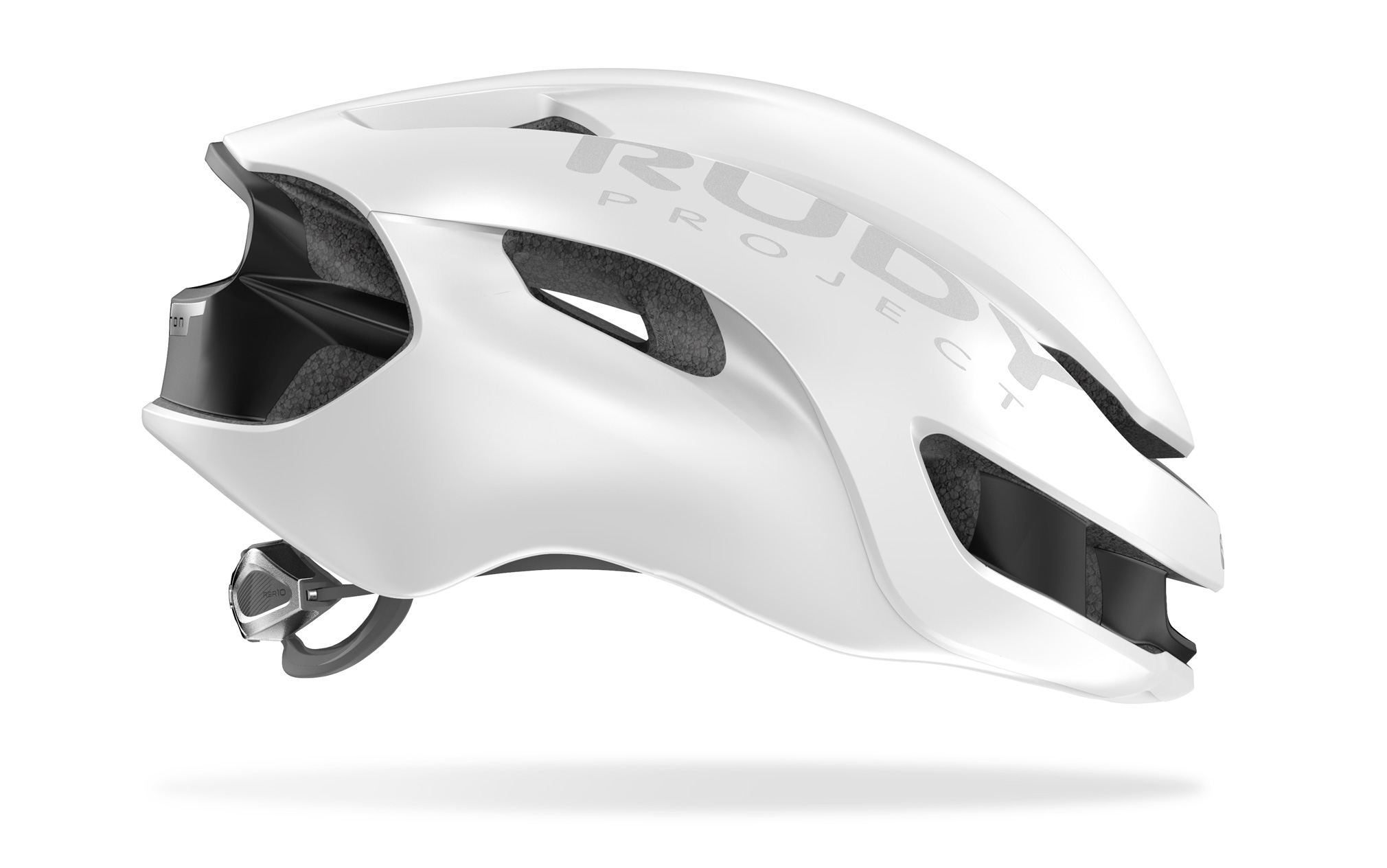
I raced for years in the Rudy Project Wing — a proper aero TT helmet, the kind with a long tail and a magnetic visor. Then I switched to the Rudy Project Nytron, and I haven’t gone back.
I’ll be honest about why, because it wasn’t a calculated decision. The Wing was too hot. I was racing and training in Texas, and by the end of the bike leg I was cooked in a way that had nothing to do with my fitness. So I tried something else, and I liked it better.
That’s the whole story. What’s interesting is that the numbers back it up — the switch I made for comfort turned out to be the faster call for me.
What a TT Helmet Is Actually For
Let me not pretend the Wing wasn’t fast. Rudy Project claims closing the front vent saves 12.6 watts at 28mph, and there’s real wind tunnel and CFD work behind that number — this is a helmet with Swiss Side aero development, not marketing copy.
If your race is short and your position is good, a TT helmet is the fastest thing you can put on your head. That’s just true.
The catch: a TT helmet is designed for a time trial position — head down, back flat, holding the same shape for the whole ride. It’s not designed to keep you cool, and it’s not designed for the moments when you sit up.
Why I Switched
It was too hot. That’s the honest answer. Texas summers are brutal, and a closed-off TT helmet turns into a sauna on a long ride. I wasn’t comfortable, and comfort on a 56 or 112-mile bike leg isn’t a luxury — it’s the thing your whole race is built on.
I’m not in a TT position most of the time. I’m an age-group triathlete, not a pro. I sit up for aid stations, for climbs, for corners, for the moments my back needs it. A TT helmet is optimized for a position I’m only sometimes in.
Then I looked at the numbers. The aero difference between a well-ventilated aero road helmet and a TT helmet is roughly 5–10 watts. That’s real, and worth having. But the power you lose when you overheat can easily exceed it — and it compounds over a long course.
The way I’d put it: the aero helmet was probably costing me more in heat than it was winning me in drag. For me, in my climate, at my level, the cooler helmet was the faster helmet.
What I Gained and What I Gave Up
Gained
- Real ventilation. The Nytron moves air — large front and side intakes feeding internal channels rather than just punching holes in the shell. Cycling News rated its ventilation 8/10 and said it cools better than most aero road helmets. In Texas, that’s the entire point.
- Comfort over a long course. Lighter, better airflow, and no long tail sitting heavy on my neck after four hours.
- One helmet for everything. It doesn’t look absurd on a training ride. I don’t swap helmets between race day and Tuesday.
Given up
- A chunk of aero. Here’s the honest part: independent testing doesn’t rate the Nytron’s aerodynamics well. Cycling News wind-tunnel tested it and scored it poorly — one of the weaker performers in their test — and road.cc called its aero gains “claimed.” If you’re chasing every watt and you don’t overheat, this is not the helmet I’d tell you to buy.
- The visor. I ride in sunglasses now, which is arguably more practical, but it’s a different setup.
The honest summary: the Nytron is a ventilation and comfort play with adequate aero, not a speed play. I chose it because overheating costs me more than drag does.
Should You Race a TT Helmet?
It depends on three things, and you can answer all three yourself.
How hot is your race? Racing somewhere cool, or an early-season event? A TT helmet is a straightforward win. Racing in Texas, Florida, Kona, or anything in summer? The math flips.
How good is your position, and how long can you hold it? If you’ve had a proper fit and you stay aero for the whole bike leg, a TT helmet rewards that. If you’re sitting up regularly, you’re paying the heat cost without collecting the aero benefit.
How do you handle heat? This is genuinely individual. Some athletes race TT helmets in Kona without trouble. Some overheat in them in mild conditions. If you know you run hot, you already know your answer.
The rule I’d give you: if you’re choosing between a fast helmet that cooks you and a slightly slower one that keeps you cool — and your race is long and hot — take the cool one. You can’t spend aero watts you don’t have because your core temperature is through the roof.
What I’d Buy Today
If you race in heat and want one helmet for everything: an aero road helmet. The Rudy Project Nytron is what I ride. However, it harder to find thesse days. If you want aero road without giving up as much speed, the Giro Vanquish MIPS is consistently at or near the top of independent aero road helmet tests — that’s the one I’d look at first.
Check price on the Giro Vanquish MIPS →
If you race cool conditions or short-course and want maximum speed: a TT helmet. The Rudy Project Wing is what I raced in, and the aero data behind it is legitimate.
Check price on the Rudy Project Wing →
If you want the current flagship: Rudy Project’s Wingdream is their top aero helmet, launched in 2024. By their numbers it beats the Wing by 13.9 watts. I haven’t ridden it — that’s research, not experience, and I’d want you to know the difference.
Bottom Line
I gave up a genuinely fast TT helmet for a cooler one, and I’m faster for it — because I stopped overheating.
The fastest helmet is the one that lets you hold your power for the whole ride. For me in Texas, that isn’t the TT lid.
If you race in heat, think hard before you buy the fastest helmet in the wind tunnel. Wind tunnels don’t have a 104-degree Texas afternoon in them.
Questions about your race or your climate? Drop a comment below.
— Andrew | My Life With AE | Competitive triathlete, 10+ years racing, Ironman Jacksonville 2027
Leave a Reply