Disclosure: This post contains affiliate links. If you click and buy, I earn a small commission at no extra cost to you. I only recommend gear I believe in.
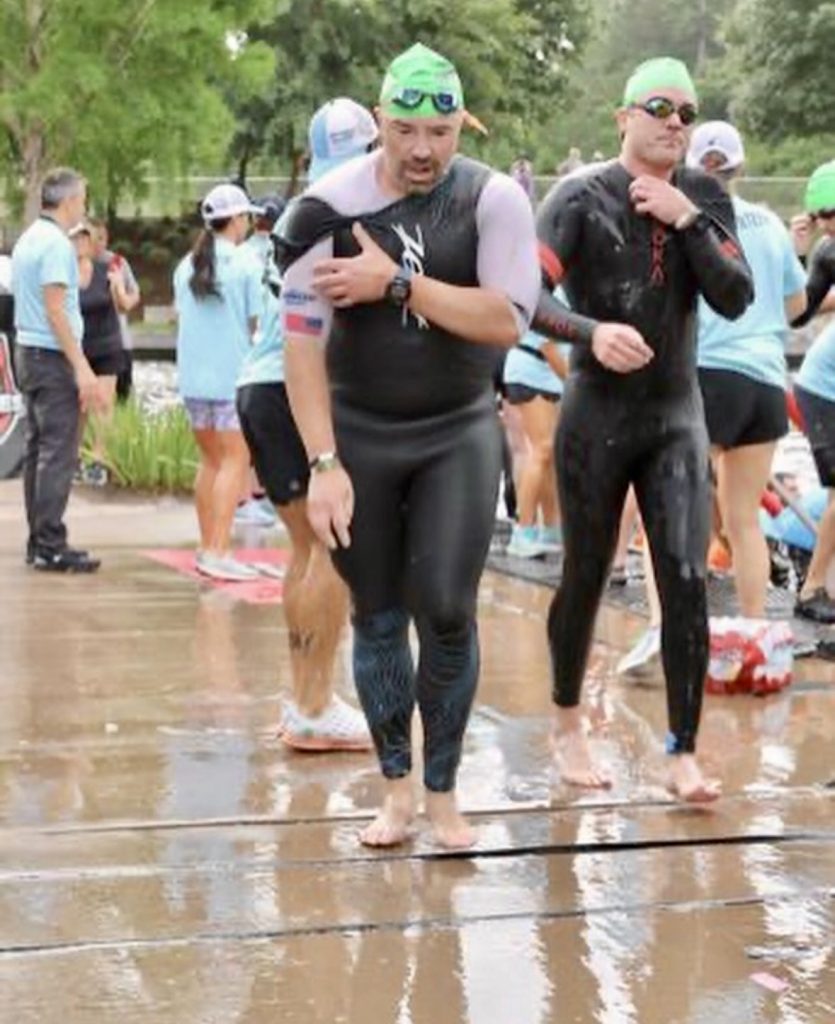
If you’re new to triathlon and staring at a wall of wetsuits wondering what on earth you actually need, I’ve been there. I’ve raced in multiple wetsuits over the years — including the Roka Maverick, my current Zoot Maui sleeveless, and a Sailfish full suit I bought in a panic the morning of a race when I forgot my tri bag in Austin. All three taught me something different about what actually matters in a wetsuit.
The short version: you need something that keeps you buoyant, doesn’t restrict your shoulder stroke, and doesn’t take 20 minutes to wrestle off in T1. Here are seven wetsuits I’d recommend to any beginner triathlete, based on real race experience and honest research.
Quick Picks at a Glance
Best overall: Roka Maverick Comp II (direct from Roka)
Best budget: TYR Hurricane Cat 1 → Check price on Amazon
Best for serious beginners: Orca Athlex Flex → Check price on Amazon
Best for open water: BlueSeventy Reaction → Check price on Amazon
Most comfortable: Speedo Fastskin LZR Openwater
Best for arm mobility: Zoot Maui Sleeveless → Check price on Amazon
The emergency purchase that surprised me: Sailfish (check your local tri shop)
1. Roka Maverick Comp II — Best Overall
Price range: $350–$450 | Best for: Sprint through Half-Iron distance
I raced in the original Roka Maverick Comp for years: this wetsuit is fast. Roka builds with competitive swimmers in mind, meaning the shoulder panels allow a full freestyle stroke without the rubber-band feeling you get in cheaper suits. Buoyancy is strong at the hips and legs, and stripping it in T1 takes under 30 seconds once you get the hang of it.
Who it’s best for: Any beginner who wants to buy once and not regret it. Note: Roka sells direct at roka.com — not available on Amazon.
2. TYR Hurricane Cat 1 — Best Budget Pick
Price range: $175–$200 | Best for: First-timers who want a quality suit without breaking the bank
If you’re racing in Texas or Florida where water temps push the upper limits of wetsuit-legal, the TYR Hurricane Cat 1 is worth considering. Thinner than most suits so you won’t overheat, but still gives meaningful buoyancy assistance. At under $200 it’s one of the best value suits on the market.
Who it’s best for: Athletes doing their first sprint or Olympic distance in warmer climates who want a solid suit at a great price.
→ Check the TYR Hurricane Cat 1 price on Amazon
3. BlueSeventy Reaction — Best for Open Water
Price range: $250–$300 | Best for: Swimmers who want more speed in open water
The buoyancy panel placement is excellent — specifically tuned to help swimmers who tend to have sinking legs, which is common in runners-turned-triathletes. The outer surface also reduces drag in choppy open water.
Who it’s best for: Runners or cyclists who came to triathlon without a strong swim background.
→ Check the BlueSeventy Reaction price on Amazon
4. Orca Athlex Flex — Best for Serious Beginners
Price range: $280–$320 | Best for: Athletes ready to invest in a suit they’ll race for multiple seasons
Orca has been making triathlon wetsuits for decades and the Athlex Flex is their sweet spot for athletes who want premium performance without the top-tier price tag. It lifts your legs, doesn’t strangle your shoulders, and is built to last multiple seasons.
Who it’s best for: Athletes who’ve done one or two races and are ready to upgrade to a suit they’ll grow into.
→ Check the Orca Athlex Flex price on Amazon
5. Speedo Fastskin LZR Openwater — Most Comfortable
Price range: $300–$380 | Best for: Athletes who find wetsuits claustrophobic
Speedo brings their pool expertise to open water and the result feels less like a rubber band and more like a second skin. If you have wetsuit anxiety, this is the one to try.
Who it’s best for: Athletes newer to open water who want a suit comfortable enough to actually enjoy the swim. Check your local tri shop or speedo.com for availability.
6. Zoot Maui Sleeveless — Best for Arm Mobility ★ I Own This One
Price range: $150–$200 | Best for: Swimmers who want zero shoulder restriction
Full disclosure: this is the wetsuit I am currently racing in, so I can speak to it from direct experience.
Going sleeveless means you give up a small amount of upper body buoyancy, but what you gain is a completely unrestricted freestyle pull. Zoot’s Neoskin neoprene is noticeably softer than standard neoprene, which matters for longer swims where chafing becomes a real issue. T1 transitions are also noticeably faster with less neoprene to strip.
Who it’s best for: Strong swimmers who prioritize stroke efficiency, or anyone who has ever felt restricted by a full wetsuit.
→ Check the Zoot Maui Sleeveless price on Amazon
7. Sailfish — The Emergency Purchase That Surprised Me
Price range: $200–$350 | Best for: Athletes who want warmth without sacrificing mobility
Here’s the story: I showed up to race in Dallas and realized I’d left my entire tri bag back in Austin. Race morning, no wetsuit. I walked into a local tri shop and grabbed the Sailfish full suit off the rack. It turned out to be a genuinely nice wetsuit.
What impressed me most was the combination of warmth and mobility. Full sleeve wetsuits can feel restrictive across the shoulders, but the Sailfish panels are cut generously enough that I did not feel restricted in my stroke. The neoprene quality is noticeably above what you get at this price point.
Who it’s best for: Athletes who race in cooler conditions and want full-sleeve warmth without the shoulder restriction. Check your local tri shop for Sailfish availability.
What to Look For When Buying Your First Triathlon Wetsuit
Fit comes first. Always use the brand size chart. Wetsuits should feel snug but not painful, with no air pockets in the torso.
Full vs. sleeveless: know the trade-off. Full suits give more buoyancy and warmth. Sleeveless gives more arm freedom and faster transitions.
Check the shoulder panels. Put the suit on and do a full freestyle arm rotation. If you feel significant resistance, the suit is too restrictive.
Know the wetsuit rules for your race. In USAT-sanctioned races, wetsuits are legal at 78°F or below. Check your specific race rules before you buy.
Practice in it before race day. At least 2–3 times. T1 in a wetsuit is a skill — practice it in training, not in front of 500 athletes.
Bottom Line
My personal rotation: Zoot Maui sleeveless for warm races where arm mobility is priority, Sailfish full suit when the water is cold. If I were buying a first wetsuit today I’d go Orca Athlex Flex to keep costs down, or Zoot Maui if shoulder mobility is your priority.
Questions about fit, sizing, or which suit is right for your specific race? Drop a comment below.
Leave a Reply